
Best Equipment for Backyard Grading Jobs
A backyard can look flat and still drain like a bathtub. One low spot beside the foundation, a patio that pitches the wrong way, or years of settled fill can turn every hard rain into a problem. The best equipment for backyard grading is not always the biggest machine available. It is the machine that can get into the yard, move the right amount of material, and leave a clean finish without chewing up everything around it.
For most residential and cottage-property grading jobs, that means compact equipment with the right attachment - not a giant dozer trying to force its way through a narrow gate. Here is how to choose the tool that fits the job.
Start With the Grade, Not the Machine
Before renting anything, figure out what needs to move. Backyard grading usually falls into one of three jobs: correcting drainage near a house, reshaping an uneven lawn or yard, or building a base for a patio, shed, driveway extension, or landscaping project.
The amount of dirt matters, but so does the distance it must travel. If soil only needs to shift 20 feet and be feathered into a gentle slope, a compact track loader with a bucket can make quick work of it. If you are stripping sod, cutting down a high area, hauling in fill, and building a pad, you need more machine capacity and better attachment control.
Also check access before you book. Measure gates, side yards, tree spacing, turns off the driveway, and overhead branches. A machine that cannot reach the backyard is just expensive driveway decoration. Tight access is where compact equipment earns its keep.
The Best Equipment for Backyard Grading
Compact Track Loader: The Hard-Working All-Rounder
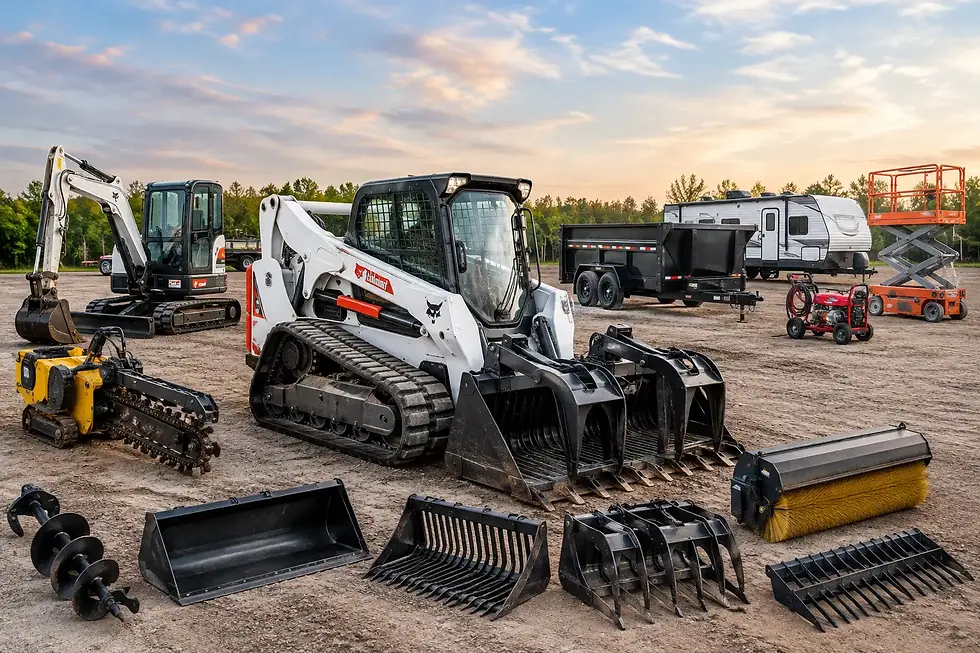
For serious grading, a compact track loader is usually the best starting point. It can cut high spots, carry fill, spread topsoil, backdrag loose material, and load debris or excess dirt into a truck or trailer. Tracks also spread the machine's weight across more ground than tires, which helps on soft lawns, wet clay, and uneven cottage lots.
A compact track loader is the right call when the job involves a real volume of material. Think regrading a yard that slopes toward the house, building up a low backyard, creating a level shed pad, or spreading several loads of topsoil. It has enough hydraulic power and breakout force to deal with packed soil that would stop lighter equipment cold.
There is a trade-off. Tracks reduce rutting, but they do not make a machine weightless. Sharp turns, wet turf, and careless operation can still tear up a finished lawn. Keep turns wide, work when ground conditions are firm, and save final turf repair for the end. A capable operator makes a bigger difference than most people expect.
Skid Steer: Strong Choice on Firm, Open Ground
A skid steer handles many of the same jobs as a track loader. It is fast, powerful, and works well for moving soil, gravel, and base material. On firm, dry ground with decent access, it can be a productive grading machine.
The weak point is traction. Wheeled skid steers can spin and rut when the yard is soft, muddy, or heavily disturbed. Manitoba clay and spring moisture are not forgiving. If the jobsite has solid ground and you need fast material movement, a skid steer is a practical choice. If the yard is soft or the grade needs work after rain, tracks are usually the safer bet.
Do not confuse a skid steer with a finish grader. It can rough-grade well, but the attachment and operator technique determine whether the final surface looks clean or looks like it was shaped with a shovel during an argument.
Mini Excavator: Best for Drainage and Precise Cutting
A mini excavator is not the first machine most people picture for backyard grading, but it can be the right tool when water is the real problem. It excels at digging swales, drainage trenches, dry wells, footing areas, and tight cuts around trees, fences, and utilities.
Use an excavator when the grade needs to be changed from the bottom up. For example, if water sits against a foundation because the downspout outlet is wrong and the yard has no route to drain, simply spreading soil may not solve it. You may need a shallow swale, buried drainage, or a properly shaped outlet first.
An excavator is less efficient for carrying soil across a large yard. Pair it with a compact loader or use it for the digging and detailed shaping while another machine handles material movement. One machine can do a lot, but two machines sometimes save a full day of fighting the wrong tool.
Tractor With Box Blade or Land Plane: Good for Long, Open Runs
A compact tractor with a box blade, rear blade, or land plane can work well for broad, open grading where precision matters more than raw digging power. It is useful for smoothing long driveway sections, maintaining a large rural yard, or lightly reshaping already-loose material.
It is not the machine to rent for a badly settled backyard full of roots, compacted soil, and piles of imported fill. Tractors pull grading tools well, but they do not have the push, lift, or digging force of a loader. If you need to cut hard ground and move material in a hurry, use a loader first and bring in the tractor only for final conditioning.
Attachments Make or Break the Finish
The base machine gets dirt moving. The attachment decides how clean the grade turns out. A standard smooth bucket is the workhorse for loading, spreading, and backdragging. For many small backyard jobs, a skilled operator can rough-grade and finish-grade with nothing more than a good bucket.
A grading bucket is wider and smoother than a general-purpose dirt bucket, making it better for feathering material and maintaining a consistent slope. It is especially useful around foundations, patios, and lawn areas where a rough finish means more hand-raking later.
A landscape rake or power rake earns its spot after major dirt work is done. It breaks up clods, pulls out rocks and roots, levels topsoil, and prepares the surface for seed or sod. It will not fix a drainage plan that is wrong, but it can turn a rough dirt yard into a surface ready for the next step.
For hard ground, a tooth bucket or grapple may be needed before finish work starts. Roots, brush, broken concrete, old edging, and buried junk will slow grading to a crawl if you try to handle everything with a smooth bucket.
Get the Drainage Direction Right
The goal is not a perfectly level backyard. A level yard often holds water. You want a controlled slope that carries water away from buildings and toward a safe drainage area without sending it straight into a neighbor's yard or creating erosion at the property line.
For grading near a home, work from a planned elevation instead of guessing by eye. String lines, stakes, a laser level, or even a long straight board and level can keep the work honest. The surface should fall away from the foundation, but the exact slope depends on the available space, soil, existing drainage, and where the water can legally and practically go.
Do not bury problems under topsoil. If the base is soft, pumping, or full of organic material, remove the bad material and rebuild it with suitable fill before placing finish soil. Topsoil is for growing grass. It is not structural fill, and it is not a cure for a sinking grade.
When a Bigger Machine Is the Wrong Rental
More horsepower sounds good until it cannot clear the gate, turns your lawn into ruts, or leaves no room to work around mature trees. A large machine can also make fine grading harder because every correction moves too much material at once.
For small lots, landscaped backyards, and properties with limited access, choose the smallest machine that has enough lift, traction, and bucket capacity for the material volume. That is the whole point of compact equipment: real muscle without turning a backyard into a demolition zone.
If you are working around Beausejour, Lac du Bonnet, Pinawa, or the surrounding rural and cottage areas, delivery can save a major headache. Mini Muscle Rentals can get serious compact equipment to the property without making you figure out transport before the work even starts.
A Simple Plan Before You Start
Walk the site after rain if possible. Mark the high spots, low spots, utility locations, trees, fence lines, and final drainage route. Decide where extra soil will go before the bucket starts cutting. Then rough-grade first, check elevations, and make smaller passes as the surface gets closer to finished.
Leave topsoil and seedbed preparation until the heavy machine work is complete. Trying to preserve a perfect lawn while moving several yards of dirt is backwards. Get the grade right, compact any fill where needed, spread the topsoil, then rake, seed, or sod.
The right rental should make grading faster, not add another problem to the job. Pick a machine that fits through the access point, matches the soil conditions, and has the attachment needed for the finish you want. Water does not care how impressive the machine looked. It only follows the grade you leave behind.


Comments