
How to Inspect Rental Equipment Before You Work
A skid steer that looks fine from the driveway can still cost you a day once it is halfway through a trench run. A loose hydraulic fitting, a worn track, a missing pin, or controls you have not tested can turn a simple rental into a stalled job. Knowing how to inspect rental equipment protects your crew, your property, and your schedule.
This is not about playing mechanic or hunting for tiny cosmetic marks. It is about making sure the machine you received is safe, complete, and ready for the work you rented it to do. Take ten to fifteen minutes before the machine goes to work. That is cheap insurance compared with losing a weekend, damaging a backyard, or being blamed for damage that was already there.
Inspect rental equipment before it moves
Do the walk-around while the machine is still on the trailer or sitting in a clear, level spot. Do not let delivery pressure rush you through it. If equipment arrives at a tight cottage lot, down a narrow drive, or beside a landscaped yard, get your photos and notes before unloading if possible.
Start with the rental agreement and confirm you have the right unit, attachment, and accessories. A compact track loader, trencher, and lift all have different inspection points, but the basics are the same. Check that the serial number or identifying number matches the paperwork, and make sure any attachment listed is actually present.
Take clear photos and a short walk-around video before first use. Get wide shots of all four sides, then closer shots of anything that is scratched, bent, dented, leaking, or worn. Photos with a timestamp are better than relying on memory after a long day of work.
Cosmetic scuffs happen. A fresh oil leak, cracked guard, bent cylinder rod, or damaged quick-attach plate is different. Call the rental provider before operating if you find anything that looks like it could affect safety or performance.
Check the machine from the ground up
A good inspection follows the same order every time. Start low, work around the machine, then move up to the operator station. That keeps you from missing obvious problems because you were focused on the controls.
Tires, tracks, and undercarriage
For wheeled equipment, look for low tires, deep sidewall cuts, exposed cords, loose lug nuts, and rims that are bent or cracked. A tire that is merely dirty is no concern. A tire with a serious cut can fail under a loaded bucket or while crossing uneven ground.
For compact track equipment, inspect the tracks for cuts, missing lugs, exposed steel, and debris packed into the undercarriage. Look at rollers, sprockets, and idlers for loose hardware, missing parts, or heavy buildup of mud and stone. Tracks do hard work, but they do not like being run loose, damaged, or packed solid with frozen material.
Check for fresh fluid under the machine. A little dampness around a fitting may need watching. A growing puddle, dripping hose, or hydraulic oil sprayed across the frame needs attention before the unit works. Hydraulic fluid is under pressure and can cause serious injury. Never run your hand along a suspected leak.
Hoses, pins, and attachments
Look over every visible hydraulic hose. Watch for cracking, rubbing, bulges, wet spots, loose fittings, and protective sleeves that have worn through. Pay close attention around the boom, loader arms, couplers, and attachment connections because these areas flex and take abuse.
Check pins, retaining clips, bushings, and pivot points. A missing retaining clip can let a pin work its way out. That is the kind of small issue that becomes a big one fast. Grease around a pin is normal. Excessive play, a bent pin, or metal shavings are not.
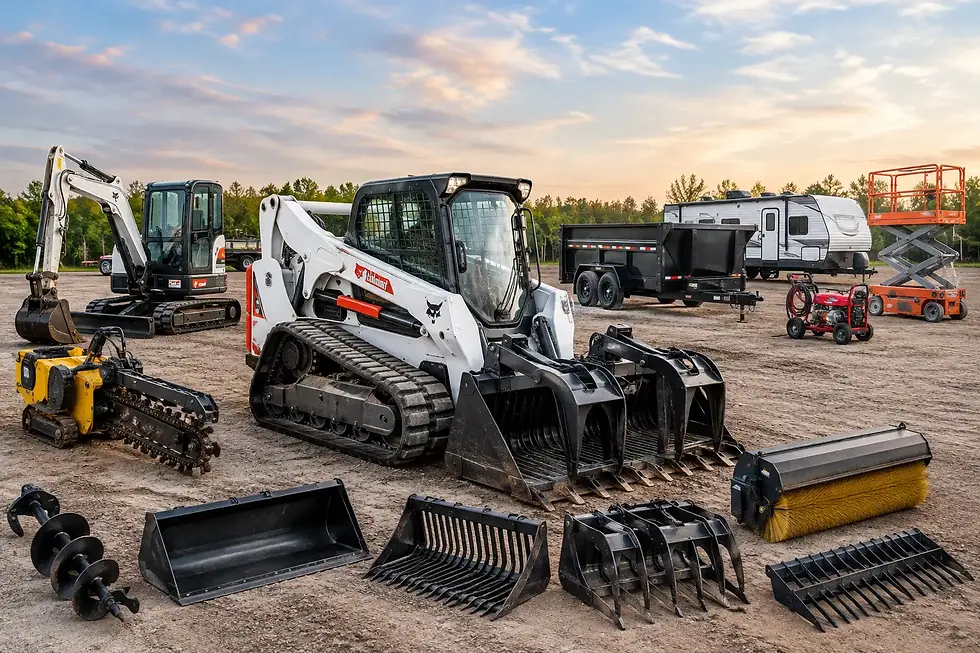
If you rented a bucket, grapple, brush cutter, auger, or trencher, inspect the attachment separately. Confirm it is fully seated in the quick-attach system and that locking pins or wedges are engaged. With a trencher, inspect the chain, teeth, boom, guards, and spoil auger. Missing teeth and worn chain components may not stop the machine immediately, but they can leave you fighting poor digging performance all day.
Do not assume an attachment is locked because it looks connected. Verify it according to the machine’s operating procedure before lifting it off the ground or putting it under load.
Check fluid levels and safety equipment
With the machine parked on level ground and shut down as required by its operating manual, check the engine oil, coolant, fuel, and hydraulic fluid. Use the proper sight glass, dipstick, or reservoir markings. Do not open a hot cooling system. If a level is low, do not just top it off and carry on without reporting it. Low fluid can point to a leak or a maintenance issue.
Look at the battery area if accessible. Loose terminals, damaged cables, or a battery that is not secured can create starting trouble or worse. Check the radiator and cooling intake for packed grass, leaves, dust, or plastic bags. Compact machines earn their keep in tight spaces, but tight spaces also collect debris around cooling systems.
Make sure the safety gear is there and usable. Depending on the equipment, that includes a seat belt, lap bar, safety interlock, ROPS structure, mirrors, horn, backup alarm, lights, fire extinguisher, and emergency lowering system. On a Skyjack lift or any aerial equipment, this step is non-negotiable. Look for the operator manual, emergency controls, guardrails, gate, platform floor, and required inspection decals.
Never operate equipment with bypassed interlocks, damaged guardrails, a broken seat belt, or a warning light you do not understand. The job can wait. A rollover or fall does not give you a second chance.
Start it up and test the controls
A walk-around only tells half the story. Once the area is clear, start the equipment and let it idle long enough to listen and look. Watch for warning lights, unusual smoke, hard starting, knocking, screeching belts, or a machine that will not hold a steady idle.
Test the controls at low speed in an open area. Raise and lower the loader arms, curl the bucket, operate auxiliary hydraulics if an attachment needs them, and check steering and travel in both directions. Listen for grinding, hesitation, jerking, or hydraulic whining that is out of the ordinary.
On a compact track loader, make sure the machine tracks straight and responds properly to control inputs. On a trencher, engage the digging chain only after confirming the area is clear and everyone is well back. On a lift, test ground controls and platform controls, including emergency stop functions, before anyone goes up.
This is also the time to learn the machine’s limits. Find the rated operating capacity, lift height, transport width, and required clearance. Big muscle for small spaces only works when you respect the machine’s footprint and center of gravity. A compact unit can fit through a gate, but it can still sink soft ground, clip a fence post, or tip if you turn carelessly with a raised load.
Document problems right away
If you find an issue, stop and report it before you continue. Send the photos or video you took at delivery, explain what you found, and ask for direction. A reputable rental provider would rather solve a problem early than have a machine damaged further or a customer stuck mid-job.
Be specific. “There is damage” is hard to act on. “The left track has a three-inch cut near the rear idler,” or “the trencher’s outer guard is bent and contacting the chain” gives the service team something useful immediately.
Do the same inspection when the rental ends. Clean off excessive mud, soil, concrete, wire, and debris so existing wear and new damage are visible. Photograph the machine, attachment, fuel level, and hour meter at pickup or return. This keeps the handoff clean for everyone.
A fast inspection habit saves real money
The best operators are not the ones who jump in fastest. They are the ones who spot a bad hose before it bursts, verify an attachment before it comes loose, and know when to call instead of forcing a machine through a problem.
Whether you are clearing brush near Lac du Bonnet, digging a utility line, or moving material through a narrow backyard, inspect first and work second. Ten careful minutes at the start keeps the machine working hard where it belongs - on the job, not parked while you sort out a preventable mess.


Comments