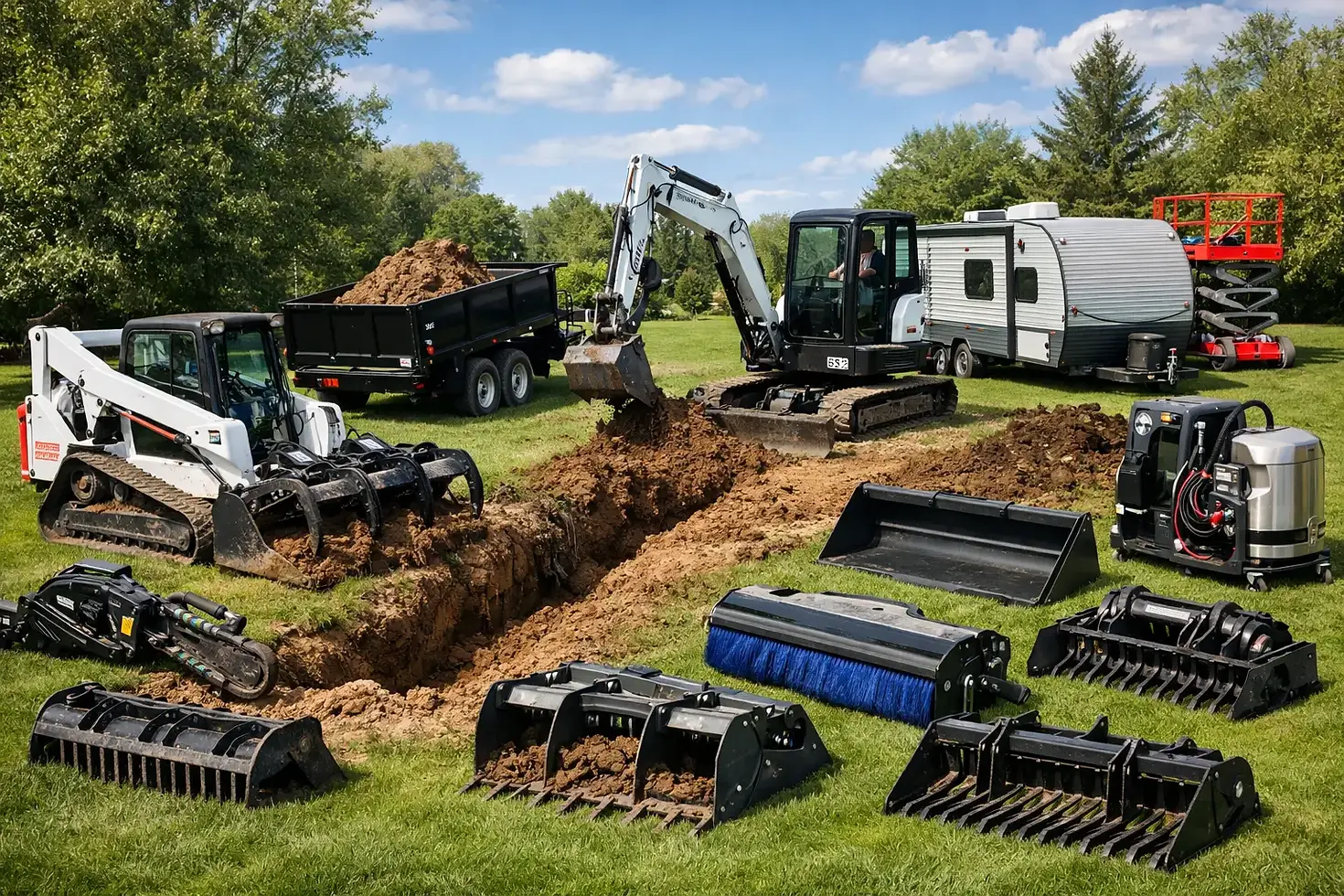
How to Protect Lawn During Excavation Work
A trench for power, water, drainage, or a new outbuilding can turn a decent yard into a muddy mess fast. Knowing how to protect lawn during excavation comes down to controlling traffic, keeping spoil piles where they belong, and refusing to work the ground when conditions are stacked against you. The goal is not zero disturbance. The goal is to finish the digging without creating three extra weekends of lawn repair.
A compact machine helps, but it is not a free pass to drive anywhere. Even a smaller excavator, skid steer, or trencher can rut turf, crush wet soil, and tear up root zones when the operator takes the easy route. Plan the job before the bucket hits the ground. That is where most lawn damage is prevented.
Protect Your Lawn During Excavation by Planning the Route
Every excavation job needs an access route, a work zone, and a place for excavated material. Mark them before equipment arrives. If the machine will make repeated trips across the lawn, do not let the route wander. Pick one direct path and keep all traffic on it.
The shortest route is not always the smartest route. A few extra feet around a soft low spot, a septic field, a mature tree, or a sharp slope can save major damage. Check gate widths, overhead branches, utility boxes, irrigation heads, and soft shoulders along the driveway. Compact equipment earns its keep on tight Manitoba properties because it can reach a backyard or cottage lot without turning the whole site into an equipment road.
Call for utility locates before digging. This protects more than the lawn, obviously, but it also prevents the kind of emergency repair that turns a clean trench into a wide, torn-up excavation zone.
Walk the Ground First
Do not judge the yard from the cab alone. Walk it after rain if possible. Look for standing water, spongy ground, old fill, buried stumps, and lawn areas that have settled over time. Turf can look dry on top while the soil below is soft enough to sink a machine.
If the ground is saturated, delay the work when you can. Working wet soil compacts it hard and leaves deep ruts that are tougher to fix than ordinary tire marks. A one-day delay is usually cheaper than hauling in topsoil, reseeding, and explaining why the yard now drains toward the house.
Build a Temporary Travel Surface
Plywood, timber mats, composite ground protection mats, or crushed stone can spread machine weight over a larger area. The right choice depends on the machine, distance traveled, soil conditions, and whether the route crosses finished turf or loose ground.
For a short, light-duty crossing on firm ground, properly placed plywood may reduce scuffing. For repeated travel, damp clay, or heavier compact equipment, real access mats are the better move. Thin sheets crack, shift, and become a hazard under a loaded machine. Do not pretend a couple of scraps of plywood will handle a full day of back-and-forth travel.
Keep mats tight together and set them on reasonably level ground. If a mat rocks or bridges a dip, fix it before driving over it. A stable temporary lane protects the grass and gives the operator a more controlled surface.
Where practical, use an existing driveway, gravel lane, or already-disturbed side yard for equipment access. Saving the front lawn is great, but not if it means destroying a softer backyard route. Put the wear where the property can handle it.
Keep Soil, Stone, and Mud Off the Turf
Spoil piles cause more lawn damage than many people expect. Excavated soil is heavy, especially when wet. Dump it directly onto grass and it can smother turf, compress the ground, and leave a dead outline long after the trench is filled.
Lay down a heavy tarp or use a designated bare-ground area for the spoil pile. Keep topsoil separate from subsoil. This matters when restoring the trench because the darker, more biologically active topsoil belongs near the surface. Mixing everything into one pile may be fast in the moment, but it leaves poorer soil where your grass needs it most.
If the job includes sand, gravel, or bedding material, give each material its own controlled pile. Loose aggregate spreads under tracks and boots, then becomes a headache during cleanup. Put materials close enough to work efficiently but far enough from the excavation edge to prevent cave-ins or material sliding back into the trench.
Do not pile soil against tree trunks, shrubs, fence lines, or the edge of a garden bed. A compact footprint does not mean there is no impact. Give established landscaping room.
Respect Trees, Roots, and Drainage
A lawn can recover from a rut. A mature tree damaged by root cutting may decline for years. Avoid excavation inside the critical root zone whenever the route can be moved. As a rule of thumb, roots commonly extend well beyond the visible canopy, so do not assume you are safe just because the trench is outside the drip line.
When work must pass near a tree, use the narrowest practical trench and avoid ripping blindly through roots. Hand digging or vacuum excavation may make sense around high-value trees, shallow utilities, or tight landscaping. It is slower, but that is the trade-off when the alternative is cutting major roots or taking down a tree later.
Also pay attention to drainage. Do not leave compacted travel lanes across the natural path of runoff. When backfilling, match the original grade and avoid creating a long low strip that holds water. A trench that settles after the first rain is not just ugly. It can kill grass, create a trip hazard, and funnel water where it does not belong.
Use the Right Machine and Attachment
Oversized equipment is often the real lawn killer. More weight, wider turns, and limited access force operators to take bad routes or make repeated corrections. For backyard utility work, fence-line trenches, drainage repairs, and tight access jobs, compact equipment can provide the digging power without bringing a massive footprint onto the property.
That does not mean smaller is always better. A machine that is too small for the soil, trench depth, or material volume can make extra passes and extend the job. The right setup is the one that completes the work efficiently while fitting the access and ground conditions.
A skid steer trencher can be a clean option for a straight, narrow utility run in open ground. A compact track loader or excavator may be better where the route bends, obstacles are close, or material needs to be moved and backfilled. Tracks generally spread weight better than tires, but they can still tear turf when turning sharply. Make wide, gradual turns and avoid pivoting in one place.
For homeowners and contractors working around narrow gates, established yards, and cottage properties, Mini Muscle Rentals focuses on the kind of compact, hard-working equipment that gets into tight spaces without bringing oversized iron along for the ride.
Backfill in Layers, Not in a Hurry
The excavation is only half the job. Poor backfilling is why a lawn looks fine on Friday and sinks by next month. Place soil back into the trench in manageable layers, compacting appropriately as you go. The required compaction depends on what is above the trench. A line under a lawn needs a different approach than a trench below a driveway, patio, or structure.
Do not overcompact the top few inches where grass needs air and water movement. Replace subsoil first, then return saved topsoil near the surface. Crown the repaired area slightly because soil usually settles. How much crown is needed depends on soil type, moisture, and trench depth, but leaving it perfectly flat is often an invitation for a low spot later.
Rake out rocks, clods, and construction debris before spreading seed or sod. If the surrounding lawn is healthy, use a seed mix suited to the site conditions rather than grabbing whatever bag is closest. Water lightly and consistently during establishment, but do not flood the repair strip into a muddy channel.
Clean Up Before the Damage Sets In
The fastest cleanup happens before mud dries into the turf. Remove soil from mats, walkways, and the driveway as the work progresses. Check the access route for spilled gravel, hydraulic drips, torn sod, and ruts while equipment is still on site. Small corrections are easy with the machine available. They become a bigger problem after pickup.
If you do rut the lawn, do not just drive over it again and hope it disappears. Lift and level the affected area while the soil is workable, then restore the surface. The same applies to torn turf at turning points. Cut out badly shredded sections, add soil if needed, and reseed or patch them properly.
A clean excavation job is not one where the grass never notices. It is one where every unavoidable disturbance is contained, repaired, and given a fair chance to recover. Protect the route, protect the soil, and use enough machine to get the work done without making the yard pay for it twice.


Comments