
How to Rent Compact Excavating Equipment
A backyard dig can go sideways before the machine even arrives. The gate is too narrow. The driveway is soft. The spoil pile has nowhere to go. Or the equipment has plenty of power but tears up the lawn getting to the work area. Knowing how to rent compact excavating equipment means planning for the whole job, not just picking the biggest machine available.
For contractors, acreage owners, and hands-on homeowners, compact equipment is often the right answer. You get serious hydraulic power in a footprint that can work around fences, trees, older lots, cottage roads, and landscaped yards. But compact does not mean one-size-fits-all. The right rental depends on access, ground conditions, digging depth, material, attachments, and how fast the job needs to move.
Start With the Job, Not the Machine
Before calling for a rental, get clear on what needs to happen on site. Are you digging a trench for water, power, or drainage? Clearing brush and roots? Excavating for a shed pad, retaining wall, septic work, or a culvert? Moving gravel, topsoil, and broken concrete?
A narrow trench and a wide foundation cut are different jobs. So are clean topsoil removal and ripping out hard-packed clay full of roots and rock. The machine needs enough reach, breakout force, lift capacity, and bucket size for the work. Renting too small can turn a one-day project into a long weekend. Renting too large can create access problems, turf damage, and extra cost without making the job any easier.
Measure the work area before you book. Know the approximate length, width, and depth of the dig. Take a few photos of the site, including gates, driveways, corners, slopes, and obstacles. Those details help the rental provider match you with equipment that can actually get where it needs to go.
How to Rent Compact Excavating Equipment for Tight Access
The first question is usually not how deep you need to dig. It is whether the machine can get in.
Measure every pinch point from the road to the work area. That includes gate openings, side yards, bridges, overhead branches, garage doors, and the space between buildings. Do not eyeball it. A few inches matter when you are moving tracked equipment through a narrow opening.
Also look at the route under the machine. Soft lawn, wet ground, steep grades, loose gravel, and old septic fields can change the plan fast. Tracks spread weight better than tires, but they can still rut a soaked yard or sink in poor ground. If access is tight and the ground is questionable, explain that upfront. A compact machine with the right setup beats forcing a larger unit into a place it does not belong.
This is where delivery can save a pile of grief. Instead of arranging a trailer, tie-downs, ramps, and a suitable tow vehicle, have the equipment dropped where the job starts. For projects around Beausejour, Lac du Bonnet, Pinawa, and cottage-country properties, delivery is often the practical move. It keeps your crew focused on the work instead of burning half a day hauling machinery.
Pick the Right Type of Compact Equipment
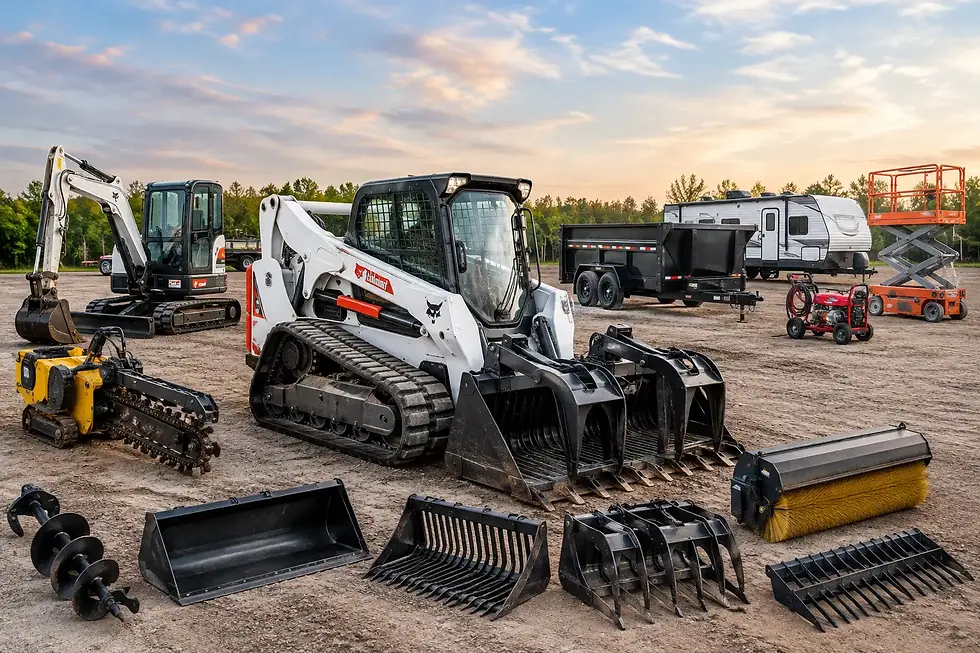
Compact excavating work is not limited to one machine. A compact excavator is built for digging, trenching, shaping grades, and working close to structures. It can swing, reach into holes, and place material with control. It is the clear choice when the job is mostly below grade.
A compact track loader or skid steer with a bucket can be the better tool when moving material is the main job. It loads trucks, carries gravel, strips topsoil, backfills trenches, and handles brush or debris quickly. Add a trencher attachment and it can cut consistent utility trenches where soil conditions allow.
Think about the full workflow. If you need to dig a trench, stockpile the dirt, bring in bedding material, and backfill afterward, you may need more than a digging machine. One well-chosen machine with the right attachment can be efficient. On larger or time-sensitive jobs, a compact excavator and a loader working together can keep the site moving.
Ask About Attachments Before You Book
Attachments are not an afterthought. They decide whether the machine is working or sitting there while you wrestle with the wrong tool.
For excavation, bucket width matters. A narrow bucket makes a cleaner utility trench and moves less material. A wider bucket speeds up shallow excavation, grading, and general cleanup. For tougher work, ask whether a tooth bucket, grading bucket, auger, trencher, grapple, or brush-cutting attachment is available and suitable for the machine.
Be honest about what is in the ground. Roots, buried stone, compacted fill, and frozen soil can make a basic plan look optimistic. The right attachment helps, but it does not turn every machine into a demolition rig. If the ground is nasty, allow more time and choose equipment with enough muscle for the conditions.
Get the Rental Period Right
Rental length is where people either waste money or create a rushed job. A day rental can work for a simple trench or small cleanup if the site is ready before the machine arrives. That means utilities are marked, materials are on hand, the access route is clear, and you know where dirt and debris will go.
If weather, material delivery, or extra prep is uncertain, a longer rental can be cheaper than scrambling to extend at the last minute. Weekend and multi-day rentals also make sense for homeowners who need time to work carefully around existing landscaping, fences, and structures.
Do not count only machine hours. Count setup, fueling, repositioning, cleanup, and loading material. A compact machine is fast, but it is not magic. Hard ground, frequent truck loading, long travel distances, and tight maneuvering all add time.
Know What the Rental Price Covers
A straight answer on cost is worth more than a low number that grows later. Ask what is included in the quoted rate: delivery and pickup, attachments, fuel expectations, damage coverage, cleaning charges, and extra-hour fees. Confirm the rental start and end times so there is no confusion around weekend work or late returns.
You should also ask about the machine's condition and basic operating instructions. A good rental provider will show you the controls, startup procedure, shutdown process, daily checks, and safe loading or parking practices. If you have limited experience, say so. Getting a quick walkthrough is smarter than learning controls beside a fence, foundation, or parked truck.
At Mini Muscle Rentals, the point is simple: professional-grade equipment should fit the jobsite and show up ready to work. That matters when a narrow backyard, rural driveway, or cottage lot will not tolerate oversized iron.
Prepare the Site Before Delivery Day
The best rental day starts before the equipment arrives. Mark the work area and clear loose debris, toys, tools, lumber, and vehicles from the travel path. Decide where you will place excavated soil. Keep that pile far enough from the edge of the trench that it does not collapse back in or crowd the machine.
Call for utility locates before digging. Never assume a shallow trench is safe just because you know where the house, garage, or shed is located. Buried electrical lines, gas, water, communications cable, and private services do not care how small the project looks.
Plan for the weather too. Rain can turn a clean access route into a mess, especially on clay or soft lawn. If the machine will cross finished turf, consider temporary ground protection where it makes sense. It costs less to protect a lawn than to rebuild one after the tracks leave deep ruts.
Run It Like a Jobsite, Not a Toy
Compact equipment is easier to maneuver than full-size machinery, but it can still cause expensive damage in a hurry. Keep bystanders away from the work zone. Watch your swing area. Stay clear of trench edges. Never work under a raised bucket or boom, and do not use the machine to lift people.
On slopes, keep the machine positioned for stability and avoid sudden turns. When digging near buildings, fence posts, trees, or utilities, slow down. The last 10 percent of a job is often where rushed operators break something that was not in the budget.
Check fluid levels, tracks or tires, hoses, couplers, and visible damage at the start of each day. If something does not look right, stop and call. Pushing through a hydraulic leak, warning light, or unfamiliar noise is how a productive rental becomes a stalled project.
The right compact machine should make the site feel manageable, not crowded. Measure the access, tell the truth about the ground, book the attachment that matches the work, and have your site ready before delivery. Then you can spend rental time moving dirt instead of solving problems that should have been handled before the keys changed hands.


Comments