What Equipment Removes Concrete? Pick the Right Tool
A cracked patio does not care whether you brought a 35-pound demo hammer or a machine built to tear out a driveway. It will punish the wrong choice either way. What equipment removes concrete comes down to four things: how thick it is, whether it is reinforced, how much room you have, and how you plan to haul the broken material out.
Concrete removal is not one job. Cutting control lines, breaking the slab, separating rebar, loading rubble, and getting it off the property are separate stages. Pick equipment for all of them before you start swinging. That is how you avoid turning a one-day tear-out into a week of sore backs, busted landscaping, and a pile nobody can move.
What Equipment Removes Concrete Efficiently?
For small, isolated pieces of concrete, handheld demolition tools do the work. For a driveway, garage pad, or thick reinforced slab, hydraulic power and a compact loader make far more sense. The right setup is usually a combination, not one magic machine.
Demolition hammer or jackhammer
A demolition hammer is the practical choice for a small sidewalk panel, a thin patio, fence-post concrete, or a damaged section that has already been cut away from the good slab. Electric models are easier to manage where noise and exhaust matter. Pneumatic and hydraulic breakers hit harder, but they need the right air compressor or carrier machine behind them.
Do not expect a light-duty hammer to make quick work of a 6-inch reinforced driveway. It can break concrete, but production will be slow and miserable. Use a pointed chisel to start fractures and a wide blade to pry up thinner sections once they crack loose.
Concrete saw
A saw does not remove the slab by itself, but it makes removal controlled instead of chaotic. A walk-behind concrete saw is the right move for straight cuts across driveways, sidewalks, garage floors, and larger pads. A handheld cut-off saw works for smaller cuts and tight edges.
Saw-cutting lets you remove only the failed section without damaging the slab that stays. It also creates manageable pieces for loading. Wet cutting controls dust, but it creates slurry that needs to be managed. Dry cutting is faster to set up in some spots, but the silica dust is serious business. Use proper dust control and respiratory protection, and keep people clear of the cutting area.
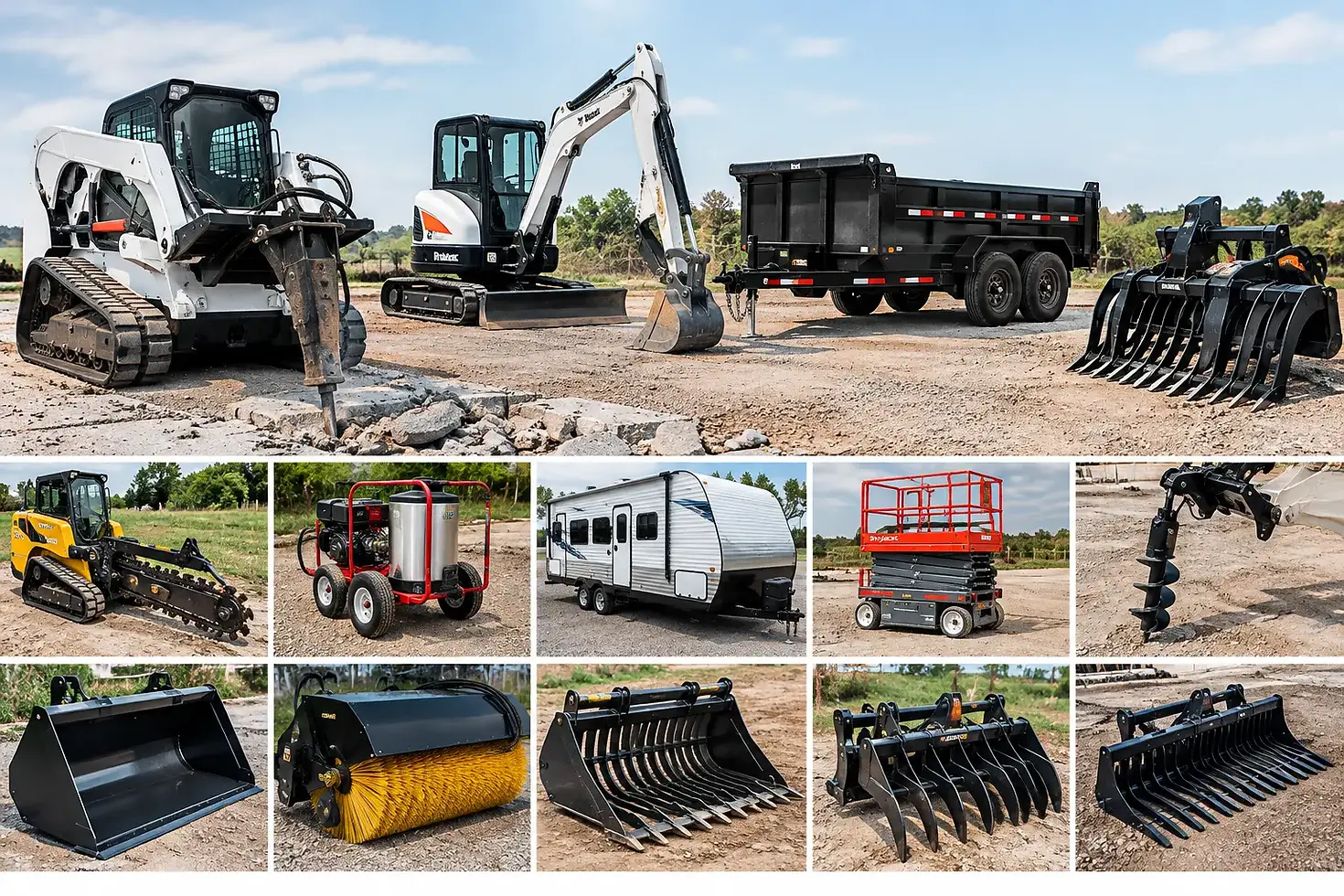
Skid steer or compact track loader with a breaker
When the concrete is thick, reinforced, or spread across a large area, a hydraulic breaker mounted to a skid steer or compact track loader is the heavy hitter. The attachment delivers repeated impact without putting an operator on the slab all day. It is a strong choice for driveways, old foundations, heavy steps, shop pads, and rough demolition where precision is less important than production.
A compact track loader also earns its keep after the breaking starts. Switch from the breaker to a bucket or grapple, load the rubble, and move it to a bin, trailer, or staging pile. That one machine can break, carry, backfill, and rough-grade the area when the concrete is gone.
Tracks matter on soft yards, cottage lots, and finished properties where you need traction without chewing up the ground. A wheeled skid steer can be quicker on firm, open surfaces. Neither machine fixes a bad access plan. Measure gates, side yards, overhead branches, and turning space before booking anything.
Mini excavator with a hydraulic breaker
A mini excavator is a smart fit when you need reach and control. It can break concrete along a foundation, work beside a building, reach down into a trench, or remove old steps without constantly driving over the debris. Its boom also makes it easier to place the breaker exactly where it needs to hit.
For narrow residential access, a compact excavator can be a better choice than a larger machine that cannot get past the driveway or around a house. The trade-off is loading speed. If there is a lot of rubble to move across the site, a compact loader may still be the better partner.
Bucket, grapple, and trailer
Breaking is only half the job. Concrete weighs roughly 4,000 pounds per cubic yard, so a modest-looking pile gets heavy fast. A loader bucket is the basic workhorse for moving broken pieces. A grapple gives better control over irregular chunks, exposed rebar, and mixed demolition debris.
Plan disposal before demolition begins. Confirm what your trailer can legally carry and what the receiving site accepts. Do not overload a pickup trailer because the pile "looks manageable." Broken concrete shifts, trailers get overloaded quickly, and the cleanup becomes a bigger problem than the slab.
Match the Machine to the Concrete Job
A 4-inch residential sidewalk and an 8-inch reinforced shop floor should not get the same plan. Thin, unreinforced concrete often breaks into manageable sections with a saw and demolition hammer. Cut it into squares first, then work from an exposed edge. The cuts keep cracks from racing into concrete you want to save.
For a typical patio or driveway section, cut the perimeter, use a breaker to fracture the slab, then load the pieces as you go. Do not let rubble build into a mountain across the work area. It blocks machine travel, creates trip hazards, and makes cleanup slower.
Thick pads, foundation walls, heavily reinforced concrete, and frost-damaged slabs need more force. A hydraulic breaker on a properly sized compact machine is usually the answer. Reinforcing steel will not simply disappear when the concrete breaks. Expect to cut rebar with suitable metal-cutting equipment and keep it separated from clean concrete if your disposal plan requires it.
If the slab sits close to a house, garage, septic system, utility line, or retaining wall, slow down. Breakers transfer vibration. Start with saw cuts to isolate the section, work in smaller pieces, and avoid hammering blindly near anything that cannot move. Call for utility locates before digging or breaking where buried services may be present.
Access Can Decide the Job Before It Starts
The biggest machine is not always the fastest machine. If it cannot fit through the gate, across a bridge, or around the back of the house, it is just expensive decoration at the curb.
That is where compact equipment pays off. A machine with real hydraulic muscle in a tight footprint can get into the backyard, work around trees and landscaping, and get back out with the debris. For rural properties and cottages around Beausejour, Lac du Bonnet, Pinawa, and the Whiteshell, access is often the first real constraint - not the concrete itself.
Before arranging equipment, measure the narrowest point from the road to the slab. Check gate width, slope, soft ground, low branches, and the location of septic lids, well heads, and buried lines. Leave room for a delivery truck, a debris bin or trailer, and a place to stage clean fill if you are repairing the area afterward.
Do Not Skip the Prep Work
Remove furniture, planters, loose gravel, and anything that can get damaged by flying chips. Mark the section coming out and identify nearby structures. If you are replacing only part of a driveway or pad, make clean saw cuts before bringing in the breaker.
Wear eye protection, hearing protection, gloves, heavy boots, and proper respiratory protection when dust is possible. Concrete chips travel farther than most people expect. Keep helpers, pets, and bystanders well outside the break zone.
Watch the base material under the slab as you work. If the concrete failed because the base washed out, settled, or froze and heaved, simply pouring new concrete into the same bad base sets up the same failure again. Remove soft material, rebuild and compact the base, and set the grade before replacement work begins.
Rent for the Whole Workflow, Not Just the First Hour
A jackhammer may look cheaper until you factor in hauling hundreds of broken chunks by hand. A large machine may look productive until it tears up the lawn or cannot reach the work. The best rental is the one that fits the slab, the access route, and the cleanup plan.
Mini Muscle Rentals is built around that kind of work: serious compact equipment for jobs where space is tight but the workload is not. Delivery can also keep you from burning half the day figuring out transport before demolition even starts.
Measure first, cut cleanly, break in manageable sections, and have a plan for every piece you create. Concrete removal gets a lot simpler once the equipment matches the real job.


Comments