
12 Best Loader Attachments for Hard Jobs
A loader is only as useful as the tool on the front of it. Put on the wrong attachment and a two-hour job turns into a full day of backing up, reworking, and fighting the ground. Put on the right one and a compact machine can dig, grade, lift, clear, and haul serious weight without tearing up the whole property.
The best loader attachments are not the ones with the longest feature list. They are the ones that match the material, the site, and the work that has to be done. A cottage lot with narrow access needs a different setup than a new build, a farm lane, or a commercial trench run.
Best Loader Attachments by Job
General-purpose bucket
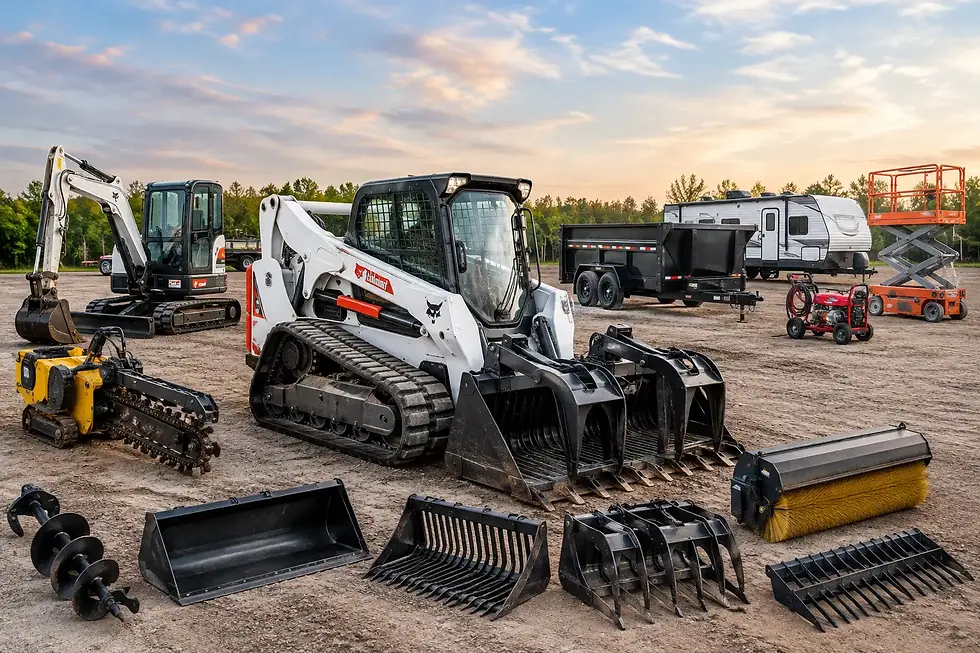
The general-purpose bucket earns its keep on almost every job. It moves gravel, soil, clay, mulch, demolition debris, snow, and fill. If you are backfilling a trench, spreading base material, loading a trailer, or cleaning up after a dig, this is usually the first attachment you need.
It is also the most forgiving choice for homeowners who have several jobs planned but do not need a specialty tool all day. The trade-off is precision. A bucket can rough-grade and carry material well, but it will not cut a clean drainage swale or finish a lawn as neatly as a dedicated grading attachment.
Tooth bucket
When the ground is packed, rocky, root-heavy, or frozen hard, bucket teeth make a real difference. They bite into material instead of skating across it. That matters when breaking into old driveway base, digging compacted clay, pulling loose roots, or loading rough fill.
A tooth bucket is built for aggression, not for a polished finish. It can leave gouges and a rough surface, especially in soft ground. Use it to break, load, and strip material, then switch tools when it is time to shape the final grade.
Grapple bucket
A grapple bucket is the cleanup weapon for ugly jobs. Storm debris, brush piles, logs, old fencing, broken concrete, construction waste, and tangled roots are hard to handle with a plain bucket. The grapple clamps down so the load stays put while you move it.
For wooded lots and rural properties, this attachment can save a pile of hand labor. It is especially useful when clearing deadfall without constantly getting off the machine to reposition loose branches. Just do not treat it like a bulldozer. Grapples are made to grab and carry, not ram stumps or pry out boulders beyond the machine's capacity.
Root grapple
A root grapple is a more open version of the grapple bucket. Its tines let dirt, loose soil, and smaller debris fall through while it holds onto brush, roots, rocks, and logs. That makes it a better fit for land clearing and site cleanup where you do not want to haul half the yard along with every pile.
It is less useful for loose gravel, mulch, or fine debris. If the job is mainly hauling material, use a bucket. If the job is separating the junk from the dirt, the root grapple is hard to beat.
Pallet forks
Pallet forks turn a loader into a material-handling machine. Lumber packages, pallets of sod, bundles of block, drywall, roofing supplies, tanks, and job boxes all move faster when you can lift them cleanly instead of handling them piece by piece.
The key is knowing the machine's actual lift capacity at the working height and reach you need. A load that is safe close to the ground may not be safe with the arms raised. Keep the load low while traveling, stay on firm ground, and never assume a pallet is balanced just because it looks level.
Land plane or grading scraper
Driveways do not usually fail because they need more gravel. They fail because water has nowhere to go. A land plane or grading scraper cuts high spots, fills washboard, redistributes loose aggregate, and helps restore a smoother crown so water sheds off the road instead of sitting in the wheel tracks.
This is one of the best attachments for cottage roads, gravel lanes, parking pads, and rural driveways. It is not a magic fix for a base that has completely failed, but it is the right tool for regular maintenance before potholes turn into a bigger excavation job.
Leveling bar or soil conditioner
Final grading is where a lot of otherwise good projects get sloppy. A leveling bar or soil conditioner helps break up clumps, pull rocks to the surface, spread topsoil, and leave a smoother seedbed. It is a strong choice for lawn restoration after trenching, drainage work, or site prep.
This attachment works best after the heavy work is done. If you are trying to cut hard-packed ground or move a large amount of fill, start with a bucket. Once the rough grade is close, switch over and save yourself hours of raking.
Trencher
A trencher is the right answer when the job calls for a narrow, consistent trench for water lines, electrical conduit, drainage pipe, or landscape work. Compared with digging the same run using a bucket, it removes less material, disturbs less of the yard, and reduces the amount of backfill and repair afterward.
Soil conditions matter. Roots, large rocks, buried scrap, and frozen ground can slow any trencher down. Call before you dig, mark utilities, and plan the trench route before the machine arrives. A straight run with a clear spoil area is faster, safer, and easier to backfill.
Auger
Fence posts, deck footings, sign posts, trees, and small foundations all become easier with an auger. It drills consistent holes quickly and keeps the operator from spending the day with a shovel in hard Manitoba soil.
The right bit depends on the hole diameter and the ground. Clay, rocky soil, and root-filled sites can require more patience than clean loam. An auger is fast, but it is not invincible. If it binds, stop and clear the obstruction instead of forcing the drive system.
Hydraulic breaker
For concrete pads, old steps, small slabs, and stubborn rock, a hydraulic breaker brings real impact power to a compact loader. It is a specialty attachment, but on the right job it can eliminate a lot of manual demolition and save the cost of bringing in a larger machine.
Breakers are loud, hard on equipment, and demand careful operation. They are not the first choice for every concrete removal job. Thin or badly cracked concrete may be faster to lift and load in chunks. But where you need controlled breaking in a tight spot, this tool earns its place.
Snow pusher or snow blade
A bucket moves snow, but it is not always efficient. A snow pusher carries a broad load without rolling it off the sides, while a blade is better for windrowing and pushing snow to a specific edge. For lanes, parking areas, yards, and commercial approaches, the difference shows up fast after a heavy snowfall.
The choice comes down to where the snow has to go. Use a pusher for open areas and repeated passes. Use a blade when you need to angle snow away from doors, parking rows, or narrow travel paths.
Brush cutter
Overgrown lots can hide rocks, wire, stumps, and old debris, so brush clearing is not just about knocking vegetation down. A heavy-duty brush cutter handles tall grass, weeds, saplings, and thick brush far faster than handheld equipment. It is a strong fit for reclaiming a neglected property, opening trails, or clearing around fence lines.
Walk the area first. Hidden hazards can damage the cutter, launch debris, or create a dangerous surprise. The machine brings the muscle, but the operator still needs a clear plan.
How to Choose Loader Attachments That Actually Fit
Start with the job, not the attachment. Ask what material you are handling, how far it needs to move, whether you need a rough cut or a finished surface, and what access looks like. A narrow backyard gate, soft lawn, steep bank, or tree-lined cottage road can change the whole approach.
Then check machine compatibility. Attachment width, mounting system, hydraulic flow, operating weight, and lift capacity all matter. A tool can physically connect and still be a poor match if it overwhelms the machine or needs more hydraulic power than the loader can provide.
Also consider the order of work. Many projects need more than one attachment. A drainage job might start with a trencher, move to a bucket for backfill, and finish with a leveling tool for lawn repair. Renting the right combination is usually cheaper than trying to force one attachment through every stage.
Compact Power Wins in Tight Spaces
Bigger equipment is not automatically better. On older residential lots, wooded acreage, and cottage properties, oversized machines can damage lawns, clip trees, or fail to get through the access point at all. Compact equipment with the right attachment gets close to the work and cuts down on hand hauling.
That is the point behind Mini Muscle Rentals: serious capability without bringing more machine than the property can handle. For jobs around Beausejour, Lac du Bonnet, Pinawa, and the Whiteshell area, delivery can also keep you from dealing with trailers, transport permits, or lost time before the work even starts.
The attachment should make the job simpler, not give you another problem to manage. Pick the tool that matches the ground and the finish you need, keep the work area clear, and let compact muscle do the hard part.


Comments