
Rental Contract Terms Guide for Equipment Jobs
A skid steer that fits through the gate is only useful if the rental agreement fits the job. This rental contract terms guide breaks down what to look for before a trencher, lift, or compact track loader rolls onto your property. Read the paperwork before the machine arrives, not after you are halfway through a muddy excavation with a deadline breathing down your neck.
Rental terms are not there to slow the job down. They spell out who handles what when fuel runs low, weather turns the ground soft, a buried line gets hit, or the equipment comes back with more damage than it left with. Straight answers up front save time, money, and hard feelings later.
Start With the Rental Period
The first line that matters is the rental period. Confirm the exact start and end time, not just the number of days. A one-day rental may mean a full calendar day, a set number of operating hours, or a machine that must be returned by a specific time. Those details change how you schedule labor, trucking, and cleanup.
Ask how extra time is handled. Some jobs go sideways for legitimate reasons: rain stops grading, a septic contractor falls behind, or the rock under the topsoil is worse than anyone expected. Know whether an additional day is charged automatically, whether you need approval first, and whether a late return triggers a full-day charge.
Delivery and pickup times deserve the same attention. If equipment is being delivered to a cottage lot, rural property, or backyard job in the Whiteshell area, make sure the delivery route is clear and the drop location is accessible. A compact machine solves plenty of access problems, but it still needs a safe place to unload.
Rental Contract Terms Guide: Know Every Cost
The advertised day rate is only one part of the bill. Good rental paperwork should make the rest clear before booking. Look for delivery and pickup charges, damage waiver fees if offered, cleaning costs, fuel charges, attachment rates, taxes, and charges for extra operating time.
Fuel is a common surprise because every company handles it differently. Some equipment goes out full and must return full. Others charge for the fuel used. Either way, ask what fuel type the machine takes and who is responsible for refueling it. Putting the wrong fuel in a diesel machine is not a small mistake. It can turn a quick trenching job into a costly repair.
Cleaning is another area where common sense goes a long way. Returning a machine with ordinary dirt from real work is one thing. Returning it packed with concrete, garbage, insulation, wire, or frozen mud is another. If the job involves demolition debris, wet clay, manure, or brush clearing, ask what condition the machine and attachment need to be in at pickup.
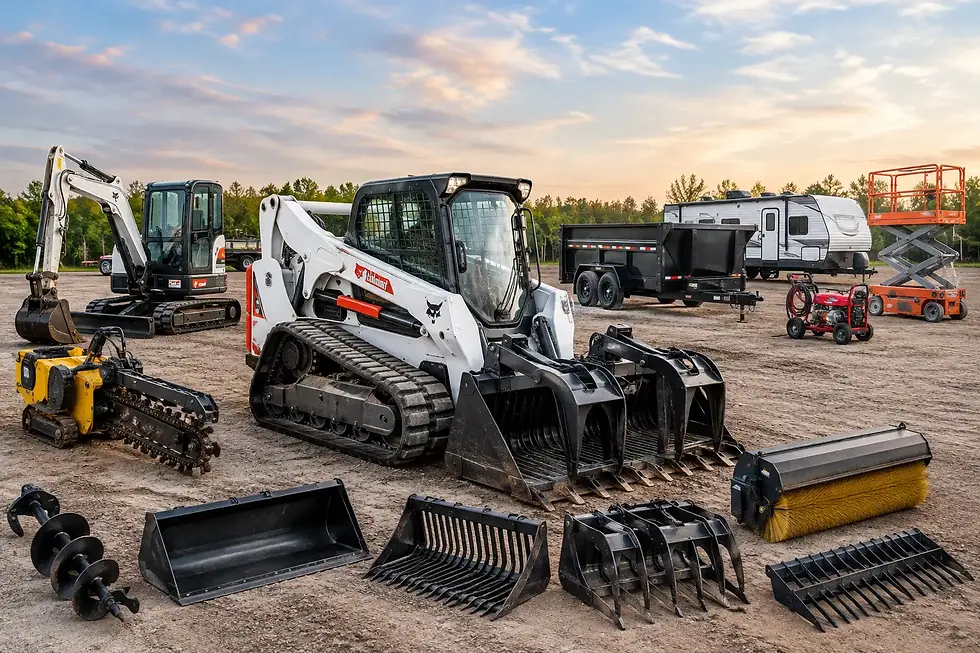
Do not assume an attachment is included because it is pictured with the machine. Confirm the bucket, forks, auger, trencher, grapple, or other attachment you need is listed on the agreement. The right compact equipment can make short work of a job, but only if it arrives set up for the work you actually have.
Inspect the Machine Before Work Starts
Walk around the machine before it goes to work. Take clear photos and short video from all sides, including tracks or tires, cab glass, lights, hydraulic hoses, buckets, teeth, controls, and attachments. If there is a scratch, bent edge, cracked lens, or leaking fitting, make sure it is documented before you start.
This is not about being picky. It is about separating existing wear from fresh damage. Construction equipment is built to work hard, and it will show honest use. But a new dent in the side panel, a torn track, or a damaged hydraulic line needs a clear record of when it happened.
Do the same when the rental ends. A quick set of return photos gives both sides a clean reference point. It is especially useful on jobs where pickup happens after you have left the property.
Ask for an Operating Walk-Through
If you have not run that exact machine or attachment before, ask for a walk-through. A few minutes on startup, shutdown, control patterns, attachment connection, transport position, and emergency procedures is time well spent.
Do not hand the controls to a buddy because they once ran a different machine ten years ago. Compact equipment has serious hydraulic power. The operator needs to understand the unit in front of them, the terrain under it, and the clearance around it.
Damage, Abuse, and Jobsite Responsibility
Most rental agreements make the renter responsible for damage that occurs during the rental period. The key is understanding what counts as normal wear versus damage caused by misuse, neglect, or an unsafe jobsite.
Normal wear may include gradual bucket wear or ordinary track wear from proper use. Damage can include broken windows, bent attachments, torn tracks from sharp debris, contaminated fuel, flooded equipment, or hydraulic damage from running the machine after a warning sign appears.
Read any damage waiver closely. A waiver can reduce exposure in certain situations, but it is not a free pass for careless operation or prohibited use. It may not cover theft, vandalism, overloading, operation by an unauthorized person, transport damage, or work performed outside the agreement's limits. If the language is unclear, ask directly: what is covered, what is excluded, and what deductible applies?
Your jobsite matters too. Clear scrap metal, wire, rebar, stumps, and hidden debris before driving across an area. Mark soft ground, septic fields, retaining walls, low branches, and overhead power lines. A compact loader has a smaller footprint than a big machine, but it can still sink, tip, snag, or damage a surface if the site is not ready.
Use the Equipment for the Job It Was Rented For
Rental contracts often restrict where and how equipment can be used. That can include limits on road travel, lifting people, towing, subleasing, hauling the unit yourself, or taking it outside the agreed service area. These rules are usually tied to safety, insurance, and maintenance - not paperwork for paperwork's sake.
A Skyjack lift, for example, is not a substitute for a material handler, and a skid steer bucket is not a personnel platform. Using the wrong tool may damage the equipment, put people at risk, and leave you responsible for costs that a waiver will not cover.
Also confirm who is allowed to operate the machine. Some agreements require named operators, a minimum age, or proof that the operator has the necessary experience. If a crew is rotating through the job, make sure every operator who will touch the controls is permitted under the contract.
Call Before You Dig
For trenching, post holes, grading, or any excavation, utility locating is on you unless the agreement specifically says otherwise. Do not assume a rural lot has no buried services. Power, gas, water, communications lines, septic components, and private lines can be exactly where you need to dig.
Mark the work area, keep the locate information available, and work carefully around marked lines. Hitting a buried service can stop the job fast and create a bill far bigger than the rental rate.
Weather, Delays, and Breakdowns
Manitoba weather does not care about your rental schedule. Rain can turn a backyard into soup. Freeze-thaw conditions can make travel routes rough. Heavy snow and soft shoulders can make pickup difficult. Ask what happens if weather prevents safe use, delivery, or retrieval of the equipment.
The answer depends on the agreement and the circumstances. A machine sitting unused because a project was poorly scheduled is different from a machine that cannot safely be collected due to a sudden storm. Be upfront early if conditions change. Waiting until the rental is overdue does nobody any favors.
If the equipment develops a mechanical issue, stop using it and contact the rental provider right away. Do not keep pushing a machine that has a warning light, damaged hose, overheating issue, strange noise, or weak hydraulic function. Continuing to operate a problem can make a manageable repair much worse.
Mini Muscle Rentals is built around straightforward rentals for hard jobs in tight places, but straightforward works both ways. Give accurate job details, ask the questions before delivery, and treat the machine like the professional tool it is.
Before You Sign, Get These Answers
You do not need a law degree to read a rental agreement. You need clear answers about the parts that affect your job. Before signing, confirm the rental start and end times, total expected charges, delivery plan, fuel requirement, included attachments, operator rules, damage responsibility, and what to do if the machine breaks down.
If an answer is only verbal, ask to have it added to the agreement or confirmed in writing. That is not distrust. That is how you keep the job moving when schedules get tight and memories get fuzzy.
The best rental contract is not the one with the smallest print. It is the one you understand well enough to put the machine to work with confidence, keep the site safe, and finish without a surprise charge waiting at the end.


Comments