Rental Machines That Fit Tight Jobsites
A machine is no help sitting at the end of a driveway because it cannot get through the gate. That is the problem rental machines are supposed to solve: getting real work done without tearing up the property, wasting a day on access issues, or bringing in more iron than the job needs.
For a new subdivision with wide-open room, bigger equipment can make sense. For an older residential lot, a cottage property, a treed yard, or a job tucked behind a house, it can be the wrong tool before the engine even starts. Compact equipment gives you the muscle to dig, lift, clear, and trench where full-size machines become a headache.
Rental Machines Are About More Than Size
Most people look at a rental machine and start with the obvious question: how much can it lift or dig? That matters. But on tight jobs, access comes first. Measure the gate. Check the turn around the garage. Look at overhead branches, soft ground, septic fields, retaining walls, and finished landscaping.
A machine that fits the site lets you work closer to the job instead of hauling material by hand from the street or making repeated wheelbarrow runs across the yard. That is where compact equipment earns its keep. Less dead time. Less labor. Less damage control afterward.
The right rental is not always the biggest machine available. It is the machine that can get in, work hard, and get back out without turning a straightforward job into a repair bill.
Match the Machine to the Work
There is no single best rental for every property project. A trench for electrical service needs a different setup than brush removal. A lift job is different from moving topsoil or breaking ground for a shed pad. Pick the machine based on what must happen on site, not just what looks impressive on a trailer.
For digging, grading, and moving material
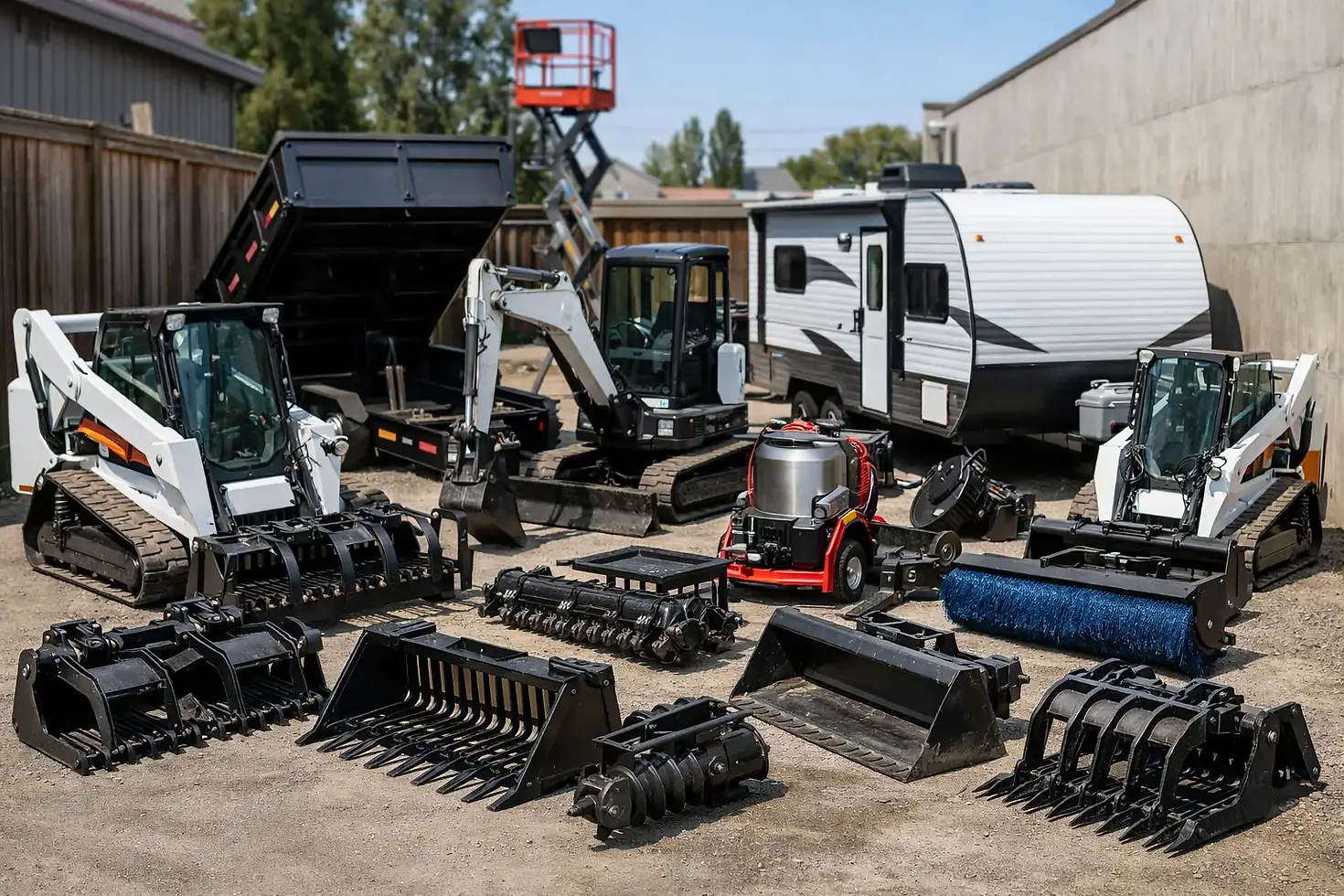
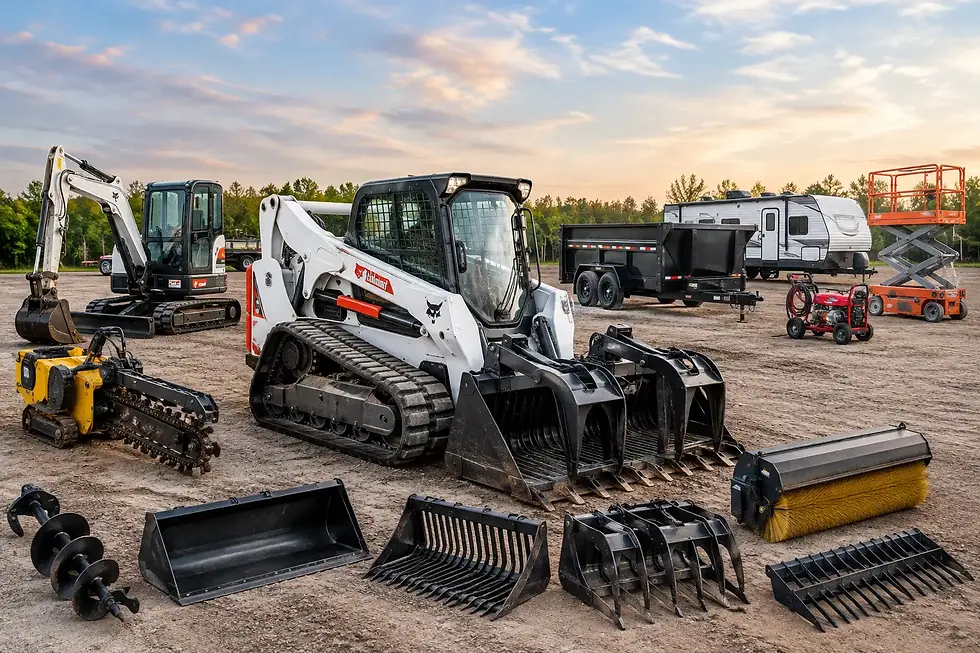
A compact track loader, such as a Bobcat T770, is built for the jobs that eat up time with hand tools. It can move dirt, gravel, mulch, debris, and other material quickly while keeping a compact footprint. Tracks are especially useful when the ground is soft, uneven, or likely to get chewed up by wheeled equipment.
This type of machine makes sense for yard grading, lot cleanup, base preparation, brush piles, backfilling, and material handling. It is also a solid choice when the work changes as you go. One minute you are scraping out a rough area, the next you are carrying material or clearing a pile. That versatility matters when the jobsite is not perfectly planned, which is most jobsites.
Still, compact does not mean careless. A tracked machine can be easier on the ground than heavier equipment, but sharp turns and sloppy operation can still mark up turf. If the lawn needs to stay clean, plan travel routes, avoid working after heavy rain, and keep unnecessary passes to a minimum.
For utility lines and drainage
Trenching by hand is slow, brutal work. It also gets less accurate the longer the trench runs. A skid steer trencher can cut a clean path for water lines, electrical conduit, drainage, landscape edging, and other underground work.
Before any trenching starts, know exactly what is below ground. Utility locating is not optional. Neither is checking local requirements for depth, placement, and backfill. A fast machine does not excuse a bad plan.
Trenchers work best when the route is marked, access is clear, and spoil placement has been considered ahead of time. Do not cut a trench and then realize the pile of dirt is blocking the only route for your materials. Keep the work organized from the start, and the machine will save serious time.
For overhead and hard-to-reach work
A Skyjack lift is the better answer when the job is above ground level. Exterior repairs, siding work, tree trimming, lighting, elevated painting, and access around buildings can all call for a stable work platform.
Ladders have their place, but they are not a substitute for proper access on a larger or longer job. A lift gives the operator room to work and reduces the constant climbing, repositioning, and awkward reaching that slows down a crew.
Ground conditions matter here. Soft soil, slopes, obstacles, and overhead lines all need attention before the lift is used. Do not treat an aerial lift like a step stool with an engine. Read the operating guidance, use the required safety gear, and keep the work area controlled.
Do the Access Check Before You Book
The fastest way to lose time is booking equipment based on the job alone and ignoring the route to the job. A few minutes with a tape measure can prevent a long day of frustration.
Start at the road and follow the exact path the machine will take. Measure narrow gates, fence openings, bridge crossings, side yards, and spaces between buildings. Look up for low branches, roof overhangs, and utility lines. Look down for soft spots, septic lids, landscaping borders, irrigation heads, and steep grades.
Also think about delivery. The machine may fit through the gate, but the delivery truck still needs a safe place to unload. A clear, firm area near the work zone makes a difference. If access is tricky, say so when booking. Straight answers upfront help prevent bad surprises on delivery day.
For rural properties and cottage lots around Beausejour, Lac du Bonnet, Pinawa, and the Whiteshell area, this check is especially important. Trees, uneven ground, narrow approaches, and long driveways are normal parts of the job, not unusual exceptions.
Renting Beats Owning When the Work Is Not Constant
Owning equipment sounds good until the machine needs transport, storage, maintenance, repairs, insurance, and time you do not have. For a contractor with steady machine hours every week, ownership may be the right call. For a homeowner tackling a major project, or a contractor with a short-term equipment gap, renting usually makes more sense.
You get the machine when the job needs it, then send it back when the work is finished. No parked equipment taking up space all winter. No tying up cash in a machine that sits most of the year. No scrambling to find a trailer that can haul it.
The trade-off is simple: rental time needs to be planned. Have materials on site before the machine arrives. Mark the work area. Line up labor if you need extra hands. A rented machine is most valuable when it is working, not waiting for gravel, fence posts, or a utility locate.
Get More Work From Every Rental Day
A good rental day starts before delivery and ends with the site left in better shape than it was found. Stage materials where they can be reached easily. Keep kids, pets, and bystanders out of the work zone. Decide where soil, brush, and debris will go before you start moving it.
If you are new to the machine, do not jump straight into the tightest corner of the property. Spend a few minutes in an open area getting comfortable with the controls, turning radius, and attachment response. Slow and controlled beats fast and careless every time.
Contractors can get more value by grouping machine-heavy work into the same rental window. Clear brush, rough grade, trench, move base material, and backfill in a logical order instead of renting separate days for each task. Homeowners can do the same by scheduling deliveries, material drops, and help from friends before the equipment arrives.
Mini Muscle Rentals is built for this kind of work: serious equipment for places where access is tight and the job still needs to get done. The goal is not to make your project more complicated. It is to put the right machine on the property, let it earn its keep, and get you moving again.
When the gate is narrow, the yard is rough, and the work is bigger than a shovel, choose rental equipment that fits the site first. The right compact machine turns a hard job into a productive day.


Comments