
When Rental Versus Ownership Makes Sense
A machine sitting behind the shop can look like an asset. Then a hydraulic hose blows, the battery dies after a cold snap, or the next job needs a different attachment. That is where rental versus ownership stops being a simple daily-rate comparison and becomes a real business decision.
For contractors, acreage owners, and hands-on homeowners, the right answer comes down to how often the machine earns its keep, where it needs to go, and who is responsible when it quits. Sometimes ownership is the smart move. Plenty of times, renting is the faster, cheaper way to get serious work done without adding another headache to the yard.
Rental Versus Ownership Starts With Job Frequency
The biggest question is not, "Can I afford to buy this machine?" It is, "How often will I actually use it?"
If you run a compact track loader, trencher, or lift on jobs most weeks of the year, ownership can make sense. A contractor with steady excavation work, repeated material handling, or regular grading needs may benefit from having the same machine ready every morning. You know the controls, you know its condition, and you are not waiting on availability when a customer calls.
But occasional use is where ownership gets expensive in a hurry. A homeowner clearing brush, digging a drainage swale, building a garage pad, or trenching power to a shop may need a machine for two days, not two years. Buying professional-grade equipment for one project can tie up a pile of cash that could stay in the project budget.
The same goes for smaller contractors with changing scopes. One month you need a track loader for site prep. The next month you need a trencher for utility runs or a lift for overhead work. Renting lets you bring in the right tool for the job instead of forcing every job around the one machine you own.
The Purchase Price Is Only the First Bill
The sticker price gets attention because it is big and obvious. The real cost of ownership shows up in smaller bills that keep coming.
Insurance, financing interest, maintenance, repairs, storage, transport, attachments, tires or tracks, and downtime all belong in the math. So does the time spent dealing with them. A machine that needs service during a tight job schedule is not just a repair bill. It can cost you labor hours, delay the next trade, and leave a customer wondering why the job is stalled.
Depreciation matters too. Equipment does not have to be broken to lose value. Hours add up. Tracks wear. Pins loosen. Newer models come out. When it is time to sell, the market decides what your machine is worth, not what you paid for it.
Renting turns many of those unknowns into a clear job cost. You book the equipment, use it hard, return it, and move on. That makes quoting simpler for contractors and budgeting less painful for property owners.
Ownership Still Has Its Place
None of this means buying is automatically a bad call. Ownership can pay off when the machine is working often enough to cover its full cost and still make money.
It also helps when speed is critical. If your crew has recurring work, a secure place to keep equipment, a reliable way to haul it, and someone who stays on top of maintenance, owning a machine gives you control. There is no rental schedule to work around and no need to arrange delivery for every job.
The key is being honest about utilization. A machine that works five days a week is a tool. A machine that works five days a month may be an expensive lawn ornament.
Cash Flow Beats Bragging Rights
Buying equipment can feel like progress. You own it. It is there when you need it. But a purchase can drain cash that would do more good elsewhere.
For a contractor, that cash may be better used for payroll, materials, fuel, insurance, marketing, or taking on another job. For a homeowner, it may belong in the actual build: gravel, drainage pipe, retaining materials, concrete, or a contractor for the specialized work you should not tackle alone.
A rental puts the cost close to the revenue or project need. If a skid steer helps you complete a landscaping job this week, its cost is part of that job. If a trencher lets you get utilities in before freeze-up, you pay for the machine when it is producing results, not while it sits through the off-season.
That flexibility matters in rural and cottage-country work. A property project can change fast when weather, ground conditions, or access problems show up. Renting gives you room to adjust without being locked into a machine that no longer fits the work.
Access and Transport Change the Equation
A big machine is no bargain if it cannot reach the work area.
Older residential lots, treed properties, cottages, narrow driveways, and fenced backyards create a problem that many equipment buyers underestimate. You may own a powerful machine, but if it cannot fit through the gate, around the house, or safely across the site, its capability does not matter much.
Compact equipment earns its keep because it can bring real hydraulic power into tight spaces. A compact track loader can move soil, clear brush, handle material, and prep a site without turning every yard into a wide-open construction zone. A skid steer trencher can cut the path for water, electrical, or drainage work without a crew digging all weekend by hand. A lift can make elevated work safer and faster than ladders and guesswork.
Transport is part of the decision too. Owning equipment means owning the hauling problem or paying someone whenever it needs to move. That means the right truck, trailer, tie-downs, permits where required, and the confidence to load and unload safely. Renting with delivery can remove a major chunk of that hassle, especially when the job is outside town or down a rough cottage road.
For jobs around Beausejour, Lac du Bonnet, Pinawa, and surrounding properties, delivery can be the difference between getting started in the morning and losing half the day chasing equipment.
Renting Lets You Match the Machine to the Work
The wrong machine costs time. It also tears up ground, limits access, and makes operators work harder than they should.
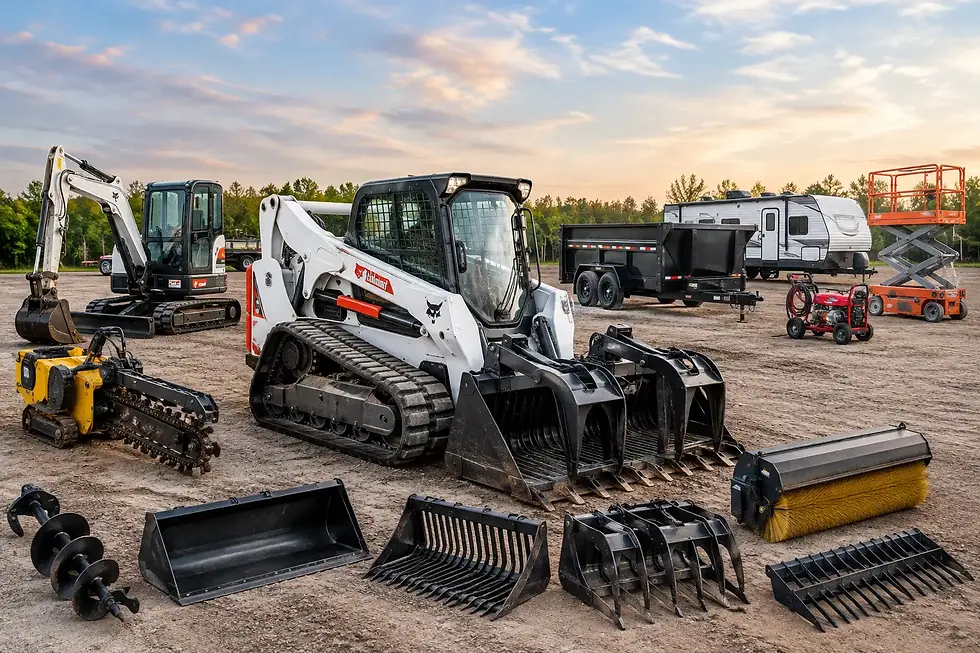
Rental is a practical answer when the job changes from one project to the next. You can rent a Bobcat T770 for heavy lifting, brush clearing, and rough grading, then use a trencher when the utility work starts. If the job needs access above ground, rent a Skyjack lift rather than trying to make a loader or ladder do work it was never meant to do.
That matters for safety as much as speed. Every machine has a job it handles well. Using the proper equipment gives you better control, cleaner results, and fewer chances to damage a building, a yard, or yourself.
Mini Muscle Rentals is built around that reality: big muscle for small spaces, without forcing customers to own, haul, and maintain equipment that only gets used once in a while.
Do Not Ignore Downtime and Repair Risk
When you own the machine, the problem is yours. A worn track, electrical issue, dead battery, cracked hose, or no-start condition does not care that the concrete truck is coming tomorrow.
Experienced owners plan for this. They inspect equipment, follow service intervals, keep parts on hand, and have a backup plan. If that is your operation, good. Ownership may fit.
If you do not have the time, tools, or interest to manage maintenance, renting shifts much of that burden away from the project. You still need to operate responsibly, inspect the unit before use, and report issues right away. But you are not carrying the long-term repair risk after the job is done.
That is especially valuable for homeowners. Learning equipment operation is one thing. Becoming the full-time mechanic, transporter, and storage manager for a machine you use twice a year is another.
A Straight Answer for Your Next Project
Buy when you have steady work, dependable utilization, storage, transport, maintenance capacity, and enough cash flow to carry the machine through slow periods. Rent when the work is occasional, the job scope changes, access is tight, or you need the machine to show up ready to work and leave when the job is finished.
Before you decide, look at the next 12 months instead of the next weekend. Count the jobs, the hauling, the repair risk, and the hours the machine will actually run. The best equipment decision is the one that keeps your project moving without leaving expensive iron sitting still.


Comments