
Best Tools for Snow Clearing: Pick the Right Muscle
A six-inch snowfall on a short walkway is one job. Wet, packed snow across a long rural driveway after the plow leaves a ridge at the road is another. The best tools for snow clearing are not always the biggest machines or the cheapest option. They are the tools that match the amount of snow, the space you have to work in, the surface underneath, and how fast you need the job finished.
For a lot of Manitoba properties, that means using hand tools for detail work and bringing in compact equipment when the driveway, yard, parking area, or access lane starts eating up your whole day. The goal is simple: move snow without wrecking the surface, blocking access, or making the same job twice as hard after the next storm.
Best Tools for Snow Clearing by Job Size
Start with the job, not the machine. A tool that works great in a tight front entrance can be useless on a long driveway. On the other hand, a powerful machine can be overkill if there is nowhere to stack snow or no room to turn around.
Snow shovels: best for steps, decks, and cleanup
A good shovel is still the right tool for stairs, narrow paths, decks, and the spots a machine cannot safely reach. A wide pusher shovel clears light, dry snow quickly on smooth pavement. A smaller scoop shovel gives you more control when snow is heavy, wet, or piled deep.
The trade-off is obvious: shoveling is slow, hard on the body, and brutal when the snowbank at the end of the driveway is packed tight. Do not try to clear a long drive with a shovel just because the forecast said two inches. Wind, drifting, and municipal plows can turn that easy job into a full afternoon.
Use a shovel for finish work, not as a punishment.
Snow blowers: best when you need to throw snow farther
A snow blower earns its keep when piling snow beside the driveway is no longer an option. It moves snow away from the work area instead of building banks that narrow your access with every storm. That matters on cottage roads, tight lots, and driveways with fences, trees, or parked vehicles close by.
Single-stage blowers are better suited to light snow and smaller paved areas. Two-stage machines are built for deeper snow, heavier loads, and the dense ridge left by a road plow. They are effective, but they still require walking behind the machine, and they can bog down in wet spring snow if you push them beyond their capacity.
A blower also needs somewhere safe to send the discharge. Throwing snow toward roads, doors, vehicles, fuel tanks, or neighbors is a bad plan. Watch the wind, aim it downwind when possible, and keep gravel in mind. Early-season clearing over loose gravel can turn your yard into a rock-throwing contest.
Plow blades: best for long, open driveways
A plow blade is fast. For open driveways, private lanes, and parking areas, it can clear a usable path in minutes instead of hours. It is especially useful for frequent storms where staying ahead of accumulation beats waiting until the snow is deep and compacted.
But a blade only pushes snow. Each pass builds a bank, and those banks eventually become the real problem. If you start too narrow, you will lose valuable driveway width after every storm. Push snow well beyond the edge early, before it freezes into a wall that is hard to move later.
Plows also demand room to work. Tight turns, narrow gates, landscaping, and buildings change the equation. A large truck may have the power, but it may not fit where the snow needs to go. That is where compact equipment with the right attachment can make more sense.
Compact loaders and skid steers: best for serious snow volume
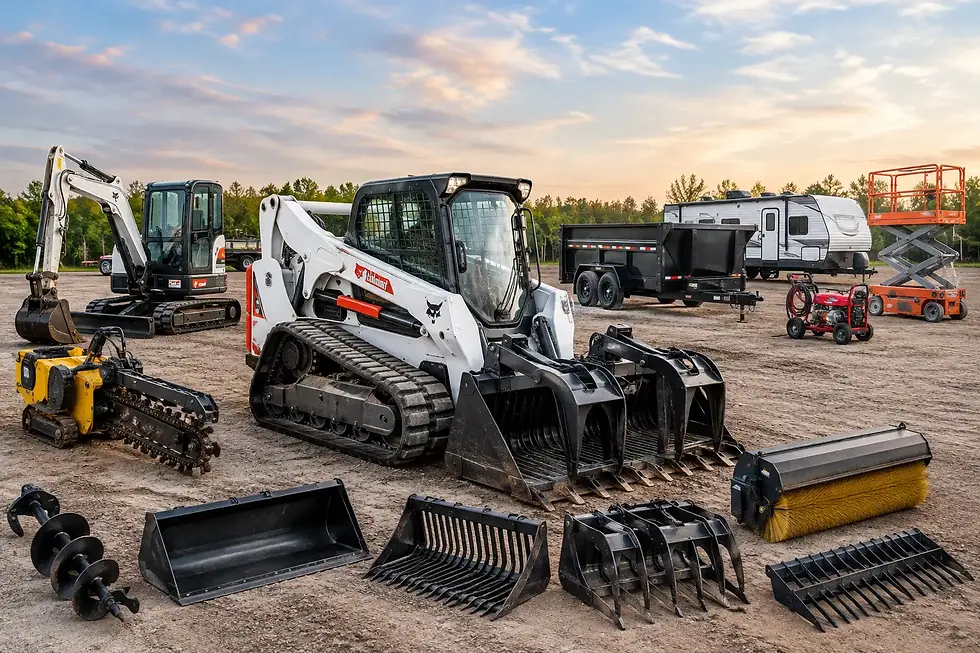
When snow needs to be lifted, carried, stacked, or moved through a restricted access point, compact equipment brings a different level of capability. A skid steer or compact track loader can push with a plow or snow pusher, carry snow with a bucket, and stack piles higher than a walk-behind machine ever will.
This is the right class of equipment for big drifts, long rural driveways, commercial-sized yards, packed snowbanks, and properties where the pile has to be relocated instead of pushed farther out. It is also useful after repeated storms, when the banks are too hard and too close for simple plowing.
The real advantage is not just horsepower. It is control. A compact machine can work around trees, sheds, parked trailers, and narrow side access if it is sized correctly for the site. Mini Muscle Rentals is built around that reality: serious muscle for places where oversized equipment creates more trouble than it solves.
A loader is not automatically the best choice for every snowfall. It costs more than a shovel or small blower, requires an operator who understands the machine, and can damage turf, curbs, decorative stone, or soft ground if used carelessly. But for a property that keeps getting buried, it can turn an all-day grind into a manageable job.
Choosing the Right Snow-Clearing Attachment
The attachment often matters as much as the machine. A bucket, plow, snow pusher, and snow blower each handle snow differently. Pick based on what you need the snow to do after it moves.
A bucket is versatile. It can scrape, scoop, carry, and pile snow, making it a solid choice for uneven ground, packed piles, and cleanup around obstacles. The downside is speed on wide, open pavement. You may need more passes than you would with a purpose-built pusher.
A plow blade is fast for opening a route and pushing snow to the side. It works best when there is plenty of room for banks. A snow pusher moves a broad volume of snow without rolling it off the sides as easily, which helps on lots and larger flat areas. It is efficient, but it needs a clear destination at the end of the run.
A hydraulic snow blower is the answer when piles have nowhere to go and snow must be thrown well away from the cleared area. It can be a strong choice for repeated heavy snowfall, but it is slower than pushing and demands care around rocks, debris, and people.
Before renting or hooking up an attachment, confirm compatibility with the machine. Flow requirements, mounting systems, weight, and operating controls are not details to guess at in the yard on a cold morning.
Do Not Ignore the Surface Under the Snow
Snow hides problems. Gravel edges, landscaping borders, low curbs, drainage grates, hoses, firewood, and kids' toys all disappear under a clean white layer. That is how a fast clearing job turns into bent equipment, damaged property, or a broken shear pin.
Walk the area before the first major storm if you can. Mark driveway edges, culverts, hydrants, decorative features, and any spot where a machine should not travel. Tall reflective markers are cheap insurance, especially on rural properties where drifts erase the edges of the road.
For gravel driveways, leave a thin base of packed snow early in the season rather than scraping aggressively down to loose stone. Set skid shoes correctly on a blower. With a blade or bucket, keep the cutting edge from digging in. Once the ground is frozen solid, you can clear closer without pulling gravel into the pile.
Pavement has its own risks. Metal cutting edges can catch raised sections or damage delicate surfaces. Rubber edges can be gentler, though they may not scrape hard-packed snow as cleanly. There is no magic setup. The right choice depends on whether your priority is bare pavement, surface protection, or raw clearing speed.
A Better Plan for Heavy Snow Days
The biggest mistake is waiting until the storm is over and then attacking a massive pile. Clear early when practical, especially if wet snow is forecast. A quick first pass keeps the base from compacting under vehicle traffic and gives you a better place to put the next round.
Open the main access first: the road connection, parking area, garage approach, and any route needed for deliveries or emergency access. Then clear secondary paths and detail areas. On long driveways, push snow outward early and keep your route wider than you think you need. Those extra feet disappear fast after three storms.
Work with the wind instead of fighting it. Avoid pushing snow across areas you will need to clear again, and never create piles where meltwater will drain back across the driveway and freeze. Visibility matters too. If you cannot clearly see the edge, the obstacle, or the person walking nearby, stop and reset.
The best snow-clearing setup is the one that keeps your property accessible without beating up your back, your equipment, or your landscape. Use hand tools where precision matters. Use a blower where snow has to travel. Use a plow where speed wins. And when the snow gets deep, packed, or too big for a walk-behind machine, bring in compact muscle that fits the jobsite and gets it cleared right.


Comments