
Compact Loader Versus Backhoe: Which Fits?
A compact loader versus backhoe decision usually comes down to one hard truth: the biggest machine is useless if it cannot get to the work. A backhoe brings serious digging depth and reach. A compact loader brings speed, attachment flexibility, and the ability to work where a full-size machine would chew up the yard or get stuck at the gate.
For a contractor trying to keep a crew moving or a homeowner tackling a real property project, neither machine is automatically better. The right choice depends on what has to be dug, moved, lifted, cleared, and accessed before the day is over.
Compact Loader Versus Backhoe: The Real Difference
A backhoe is built around a dedicated digging arm. It generally has a loader bucket on the front and an excavator-style boom on the rear. That layout makes it a strong choice for deeper holes, longer trench runs, utility work, and jobs where the machine can stay planted while the operator digs.
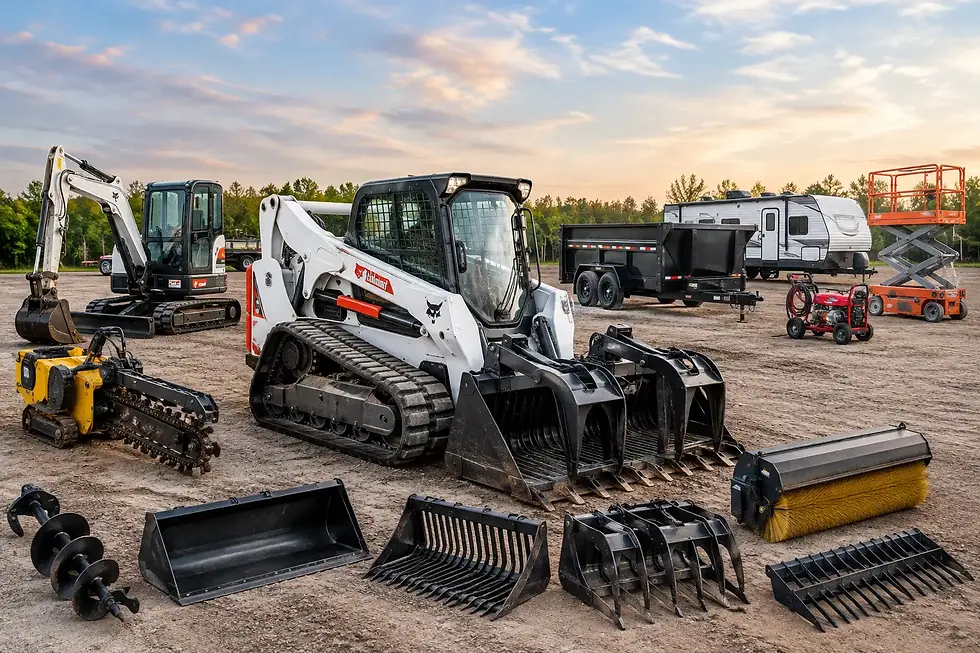
A compact loader, often called a skid steer or compact track loader, is built around a quick-attach system. One machine can carry a bucket in the morning, forks after lunch, and a trencher or brush cutter when the job changes. It does not replace a backhoe on every excavation job, but it covers more than digging.
That difference matters on small builds, acreage cleanups, cottage properties, and older residential lots. If you need to spread gravel, haul spoil, load a trailer, rip out brush, trench a line, and clean up afterward, a compact loader can keep working without bringing several separate machines onto the site.
When a Backhoe Is the Better Tool
Pick a backhoe when digging is the main event, especially when the excavation is deep, narrow, or needs significant reach from one setup position. Think septic work, larger drainage repairs, deep utility trenches, foundation excavation, or removing material from a hole where a compact loader bucket would be fighting the job.
A backhoe operator can dig below grade while sitting in one place, then swing the bucket and place spoil beside the trench. That is efficient on open ground with plenty of room for the machine, spoil piles, trucks, and safe turning space. The rear boom also reaches over obstacles that would force a compact loader to make repeated repositioning passes.
Backhoes also make sense when digging depth is non-negotiable. A compact loader with a trencher attachment cuts a clean, consistent trench, but it has limits on depth, ground conditions, and the width of the cut. A backhoe gives more flexibility when the line is deep, the trench needs shaping, or large rocks and stubborn material are part of the deal.
There is a trade-off. A backhoe is not the handiest machine for a job that shifts constantly from digging to grading to lifting palletized material. It can do more than dig, but swapping its role is not as quick or clean as changing attachments on a compact loader.
Where a Compact Loader Wins
Compact loaders earn their keep when access, speed, and versatility matter as much as raw digging ability. A machine with a compact footprint can work down narrow driveways, beside garages, between trees, and around established landscaping with less collateral damage.
That matters in places like Manitoba cottage country, where treelines, uneven approaches, tight lots, and soft ground can turn equipment access into the first problem of the job. Getting a larger backhoe onto the property may mean removing fencing, widening an entrance, or risking ruts in areas that were supposed to stay clean.
A compact track loader is especially useful when ground pressure is a concern. Tracks generally spread machine weight across more surface area than tires, helping the machine stay productive in soft soil, loose fill, or damp conditions. That does not make it weightless. Any machine can rut a wet lawn when pushed too hard. But a compact tracked machine gives you a better chance of getting work done without turning the site into a repair project.
The other advantage is attachment power. With the right attachment, a compact loader can handle jobs that would otherwise require a separate piece of equipment. It can trench for water or electrical lines, move brush and logs, carry palletized stone or lumber, break up and move piles, grade a driveway, backfill a trench, and load debris into a dumpster or truck.
For many property jobs, that flexibility saves more time than a deeper digging arm would.
The Bobcat T770 Kind of Work
A high-output compact track loader such as a Bobcat T770 is built for serious material handling and demanding attachment work. It is not a toy for light yard chores. It has the muscle for hauling fill, moving large loads, clearing brush, handling forks, and running hydraulic attachments where a smaller machine starts to run out of steam.
That makes it a strong fit when the work is varied and the site is tight. You can open up an overgrown area, move material, trench a service line, and rough-grade the finished surface without cycling through a lineup of machines. For a contractor, that means fewer delays. For a homeowner, it means less time paying for equipment that sits still.
Digging Depth Is Not the Only Number That Matters
People often compare machines by asking one question: how deep does it dig? It is a fair question, but it can lead to the wrong rental choice.
First, look at the actual scope. A shallow utility trench, landscape drainage run, or post-hole area may not need a backhoe at all. A compact loader with a trencher can cut a narrow, controlled trench quickly, especially where the route is clear and consistent.
Then look at what happens after the hole is open. You still need to manage spoil, bring in gravel or bedding material, backfill, compact, grade, and clean the site. If those tasks make up half the job, a compact loader often becomes the more useful machine overall.
On the other hand, do not force a compact loader into a job that calls for a backhoe or excavator. Deep trenching around existing services, large stumps, major drainage structures, and foundation work need the right digging reach and control. Saving money on the wrong machine can cost more in production time, site damage, and frustration.
Access Can Make the Choice for You
Before booking anything, walk the route from the road to the work area. Measure gates, check for low branches, spot overhead lines, and look at turning space. Check the ground, too. A dry gravel lane and a wet lawn are two completely different access situations.
Also think about where trucks will unload and where material will go. A backhoe may be capable of the excavation, but if it cannot safely reach the backyard or maneuver around the house, its capability does not help. Compact equipment is often the practical answer because it gets to the work without turning the entire property into a construction zone.
This is where delivery and machine selection matter. A quick conversation before the rental can prevent a bad fit. Be straight about the gate width, slope, soil, task list, and whether you need to protect finished lawn, pavers, fencing, or trees. Good planning is cheaper than discovering an access problem when the machine is already on site.
Rental Cost: Compare Production, Not Just the Daily Rate
A backhoe may look like the obvious value if you have a large digging job. A compact loader may look cheaper because it is smaller. Neither assumption tells the whole story.
The better question is how many machine hours the work actually requires. If a compact loader replaces a bucket machine, a trencher, forks, and a brush-clearing setup, one rental can cover multiple stages of the project. If the work is mostly deep excavation for two full days, a backhoe may finish faster and be the more economical choice even if its daily rate is higher.
Factor in transport, access preparation, cleanup, and the cost of bringing in another machine when the first one cannot handle a task. The cheapest rental on paper is not always the cheapest job.
Choose the Machine That Leaves Less Work Behind
Choose a backhoe when you need deep, controlled excavation in an open work area. Choose a compact loader when you need a hard-working machine that can fit into tight spaces and handle a mixed list of digging, hauling, clearing, lifting, and grading tasks.
If the job has both demands, break it into phases. Bring in the digging machine for the deep excavation, then use compact equipment to move material, backfill, finish grade, and clean up. That is often faster than asking one machine to do a job it was never built to do.
The best rental is the one that reaches the work, handles the real workload, and lets you leave the property looking like progress happened instead of damage.


Comments