
Home Project Equipment Rental Checklist That Works
A rented machine can save a full weekend of shovel work - or create a bigger mess if it cannot get through the gate, reach the work area, or handle the ground conditions. This home project equipment rental checklist helps you sort out the real job before equipment arrives, so you rent enough machine without bringing in more iron than your property can handle.
Start With the Job, Not the Machine
Do not start by asking for the biggest machine available. Start with what has to move, cut, dig, lift, or clear. A trench for electrical service is not the same job as stripping sod for a patio. Clearing brush is not the same as moving piles of wet clay. The attachment often matters as much as the machine.
Write down the work in plain language. How long is the trench? How deep does it need to be? Are you moving gravel from the driveway to the backyard? Do you need to lift materials to a roofline or second-story work area? Is there brush, stumps, hardpan, rock, or standing water involved?
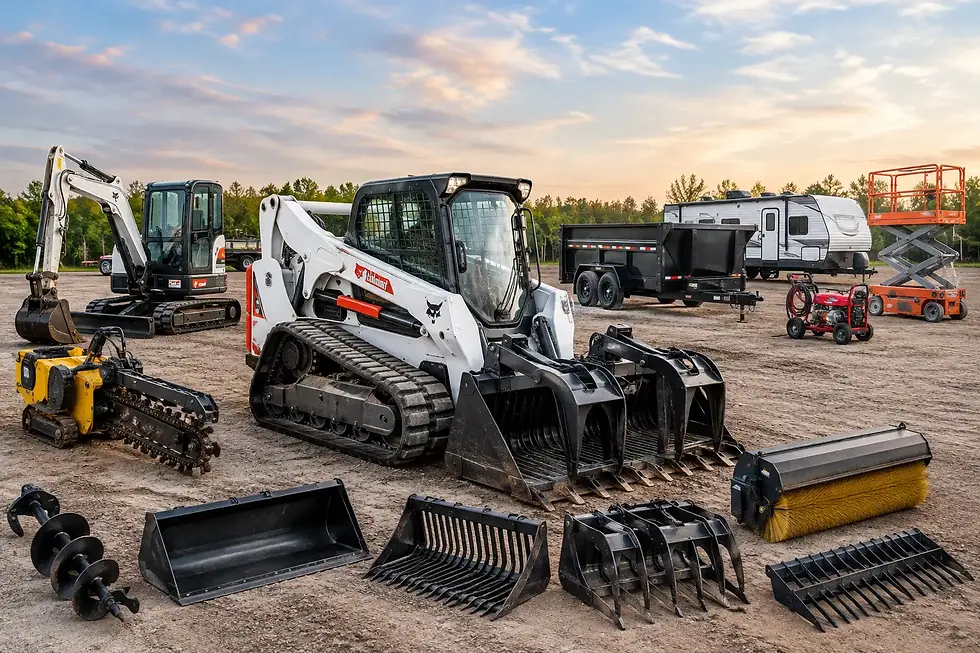
That information points to the right rental setup. A compact track loader can handle grading, material movement, brush work, and site cleanup with the right attachment. A skid steer trencher is built for clean, consistent trenches. A lift makes access work safer and faster than building makeshift platforms. Renting the wrong tool usually costs more than renting the right one for an extra day.
Measure Access Before You Book
This is where home projects get real. Many rural properties, older lots, and cottage yards have narrow gates, tight turns, low branches, soft shoulders, or a driveway that was never meant for heavy equipment. A machine can have all the power you need and still be useless if it cannot reach the job.
Measure the narrowest point from the road to the work area. Check gate width, driveway width, turns around buildings, clearance under limbs and wires, and any tight spots between sheds, fences, or landscaping. Include the path a delivery truck needs to use, not just the path the machine will travel.
Also look down. Soft lawns, septic fields, buried lines, retaining walls, irrigation systems, and wet ground can change the plan fast. Compact equipment is made for tight spaces, but it still has weight, traction, and turning needs. If the ground is soft, a tracked machine may be the better fit. If the work is close to a finished lawn or garden bed, protect the route with mats or plywood where appropriate and keep unnecessary travel to a minimum.
Home Project Equipment Rental Checklist: Match Tool to Task
Use this list before you call. It gives the rental team the details needed to recommend equipment that will actually work on your site.
Excavation: Know the trench length, required depth, soil type, and whether roots, rock, or old fill are likely.
Material moving: Estimate how many yards of gravel, soil, mulch, or debris need to move and how far the machine must travel.
Brush clearing: Identify whether you are dealing with grass, saplings, dense brush, fallen limbs, or stumps. These are different jobs.
Grading: Mark the high spots, low spots, drainage direction, and finished surface you are trying to create.
Access work: Measure the working height, ground slope, overhead clearance, and space needed to position a lift safely.
Demolition and cleanup: Consider the size and weight of concrete, lumber, soil, and debris. Plan where it will go before you start tearing things apart.
Be honest about the material. Dry topsoil behaves differently than wet clay. Loose gravel is different from packed road base. A few small roots are not the same as an old tree line. Clear details prevent underpowered rentals, broken schedules, and wasted time.
Plan the Delivery Route and Drop Zone
Delivery is a convenience only when the site is ready for it. Choose a firm, level drop zone with enough room for the delivery vehicle to pull in, unload, and leave safely. Move parked vehicles, trailers, firewood, loose materials, and anything else that blocks the approach.
If your job is near Beausejour, Lac du Bonnet, Pinawa, or a cottage property farther into the Whiteshell area, do not assume a remote road will be easy just because you drive it every day. Tell the rental company about steep grades, tight approaches, poor turnarounds, seasonal road conditions, or low branches. A two-minute conversation before delivery beats trying to solve access problems with a loaded trailer at the end of a long driveway.
Keep the drop zone close to the job if the ground allows it. Every extra pass across a lawn or rough property adds time, fuel, and wear. It can also leave tracks where you did not want them.
Check Utilities, Property Hazards, and the Weather
No rental checklist is complete without utility planning. Call for utility locates before digging, even if you are sure you know where lines run. Properties change over time. Old cable, private water lines, septic components, irrigation lines, and abandoned services do not always show up where you expect.
Mark out known hazards before the machine arrives. Flag wells, septic lids, culverts, drainage ditches, fence posts, shallow roots, rock piles, and fragile landscaping. If a trench crosses a driveway or walkway, decide in advance how you will protect it and restore the surface.
Weather deserves the same attention. Rain can turn a clean excavation job into a mud problem, especially in clay soil or low-lying areas. Frozen ground may require a different plan than summer soil. High wind can stop lift work. If your schedule is tight, build in a weather buffer instead of assuming every hour of the rental will be productive.
Set Up the Operator for a Safe First Hour
Powerful compact equipment is not a lawn tractor. Before starting, make sure the operator understands the controls, safe operating limits, attachment use, and shutdown procedure. Ask questions at handoff. That is not slowing down - that is how you avoid breaking something, getting stuck, or putting a machine where it cannot safely get back out.
Wear proper boots, gloves, eye protection, and hearing protection when the work calls for it. Keep kids, pets, helpers, and bystanders well clear of the work zone. Do not carry passengers. Keep loads low while traveling, work slowly on uneven ground, and stay away from trench edges and steep slopes.
For lift work, use level ground and follow the machine's operating rules. Do not improvise with boards, ladders, buckets, or extra height. The shortcut is never worth it.
Build a Realistic Rental Timeline
Most home projects take longer than the clean version you picture at the start. You may hit rock. The gravel delivery may arrive late. A rainstorm may turn the yard soft. You may need an hour to move material out of the way before the actual job can begin.
Break the work into stages: site prep, primary work, cleanup, and final grading or restoration. If you are renting a trencher, make sure the route is cleared and marked before the rental begins. If you are moving material with a loader, have the pile delivered and placed where the machine can reach it. If you are renting a lift, make sure the materials and workers are ready before it shows up.
A one-day rental works when the job is staged properly. A multi-day rental can be smarter when the property is large, weather is questionable, or several tasks need the same machine. The lowest daily price does not matter if you spend half the rental period waiting on materials or figuring out access.
Inspect Before and After the Work
Walk around the machine with the rental representative before use. Look for existing damage, check the attachment connection, and make sure you know the fuel expectations and return condition. Take clear photos if needed. This protects both sides and keeps the rental straightforward.
At the end of the job, remove loose mud and debris where required, park the equipment where pickup can happen safely, and make sure attachments are together. Do not leave the machine buried behind a new pile of soil, blocked by vehicles, or on ground that may turn soft overnight.
The best rental jobs are not fancy. The right machine fits through the access point, does the heavy work without chewing up the property, and leaves you with a finished project instead of a fresh problem. Plan the site honestly, ask direct questions, and rent the muscle your job actually needs.


Comments