
Best Rental Equipment for Fence Installation
A fence job can look simple from the road: set posts, hang rails, stretch wire or screw on panels. Then you hit hard clay, buried rock, wet ground, a crooked lot line, or a backyard gate too narrow for a full-size machine. That is where the best rental equipment for fence installation earns its keep. The right machine does not just save your back. It keeps the job moving when hand tools start losing the fight.
For most fence work, you do not need the biggest iron available. You need enough hydraulic power to drill, carry, grade, and clean up - in a machine that can actually reach the fence line without chewing up the whole property.
Start With the Fence, Ground, and Access
There is no single rental package that fits every fence. A straight run of wood privacy fence on level ground calls for different equipment than a long barbed-wire perimeter, a chain-link enclosure, or a heavy commercial gate install.
Start by looking at post size, hole depth, soil conditions, and total footage. Then look at access. Can a machine get through the side yard? Is there a treeline, septic field, deck, retaining wall, or established lawn to work around? On cottage properties and older rural lots, access is often the real problem - not lack of power.
A compact tracked machine is usually the smart answer when the job needs serious muscle but the route in is tight. Tracks spread weight better than tires on soft or damp ground, and a compact footprint is far easier to manage around landscaping, narrow driveways, and rough ground.
Best Rental Equipment for Fence Installation Jobs
Compact track loader or skid steer
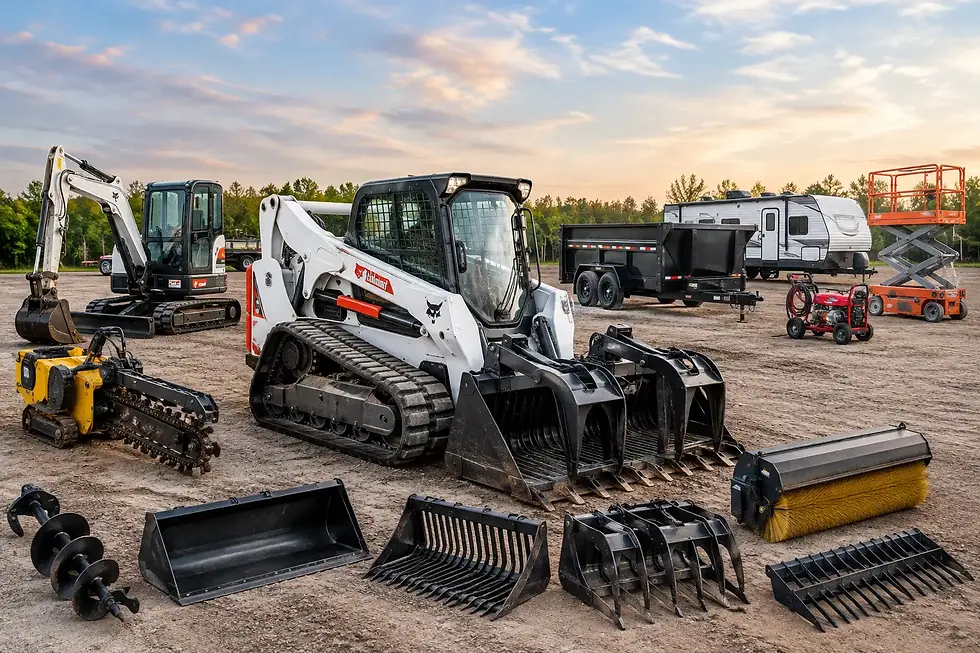
If you are installing more than a short backyard run, a compact track loader or skid steer is the workhorse. It hauls posts, bags of concrete, rolls of wire, panels, gravel, and tools without turning the crew into a pack mule service. With the right attachment, it can also drill holes, trench utility lines, scrape the work area, and move spoil piles out of the way.
This is the rental that makes the most sense when the job has several moving parts. Instead of renting one machine for holes and handling every other task by hand, you have a platform that can do the hard work all day.
The trade-off is room to operate. A loader needs turning space and a clear path along the fence line. Before booking, measure gates and identify soft spots, overhead branches, and slopes. Bigger is not automatically better if it cannot get where the work is.
Hydraulic auger for post holes
An auger attachment is the fastest way to drill consistent post holes in decent soil. It is a strong fit for wood privacy fences, farm fencing, chain-link posts, and any layout with a lot of holes to dig. A hydraulic auger also keeps hole placement cleaner than repeatedly fighting a handheld unit that wants to kick, wander, or stall.
Match the auger bit to the post and your local conditions. A hole needs enough room for proper setting material and alignment, but drilling oversized holes creates extra spoil and wastes concrete. For standard fence posts, that balance matters. For large corner posts, gate posts, or deep frost-resistant settings, you may need a larger bit and a machine with enough reach and stability to handle it.
Augers are not magic in every ground condition. Dense rock, buried roots, demolition debris, and frozen ground can stop progress fast. If the soil is questionable, plan for slower production and ask about the right bit for the ground. A little planning beats having an auger hanging over a hole while the crew stands around waiting.
Skid steer trencher for utilities and drainage
A fence installation sometimes includes more than posts. Powered gates, lighting, security wiring, irrigation adjustments, or drainage work can mean trenching alongside the fence line. A skid steer trencher cuts a narrow, controlled trench much faster than a shovel crew, especially over long runs.
It is useful, but only when the job truly needs it. Do not rent a trencher just because it sounds productive. If there are no utilities to run and no drainage issue to fix, put that money toward the equipment that will actually speed up post setting.
Always locate underground utilities before digging. Rural properties can still have buried electrical lines, water lines, old drainage, private cables, or abandoned infrastructure that is not obvious from the surface. Mark it first. Dig second.
Pallet forks and material-handling attachments
Pallet forks are not flashy, but they can be one of the best attachments on a fence job. They let you unload bundled posts, stacked panels, pallets of concrete, gate hardware, wire rolls, and gravel where the crew needs them. That means less carrying, fewer truck trips across the site, and less wasted time.
For contractors, forks help keep materials organized as the install progresses. For homeowners, they reduce the temptation to overload a pickup or try to move heavy bundles by hand. Fence panels and gate components are awkward. Awkward loads are where injuries and damaged materials start.
A bucket is just as useful for moving excavated dirt, hauling gravel for a gate approach, backfilling holes, or cleaning up after the posts are set. If you are renting a loader, think beyond the hole-drilling attachment. The right attachment swap can save hours.
Post driver for long agricultural fence runs
For certain agricultural, field, and wire fence jobs, a post driver may be a better fit than an auger. Driving T-posts or suitable round posts is fast and avoids the concrete-and-hole process entirely. It works especially well when the fence design, post type, and ground conditions support driven posts.
But this is not a universal replacement for drilling holes. Heavy wood privacy posts, large gate posts, and posts that must be precisely set in concrete generally need a drilled hole. Use the method that fits the fence design, not the one that looks fastest on paper.
Lift equipment for tall or awkward sections
Most residential fence work stays close to the ground. A lift becomes useful when you are dealing with tall commercial fencing, elevated work around slopes, large gate structures, or access where ladders are a bad idea. It gives a worker a stable platform and keeps the job safer when handling long, awkward components at height.
Do not rent a lift for ordinary six-foot panels on flat ground. A compact loader, auger, and good layout will do more for productivity. But when height and safe access are real issues, proper access equipment beats balancing on a ladder with a heavy rail in your hands.
Rent the Package, Not Just the Machine
The most efficient fence jobs are planned as a package. A compact loader with an auger may be the core setup, but add pallet forks if you are unloading a large material order. Add a bucket if you need to move spoil, gravel, or backfill. Add a trencher only if utilities or drainage are part of the scope.
This approach matters because fence work has natural downtime. The crew drills holes, then waits while materials get carried over. Or they set posts, then lose time moving dirt and concrete bags. One versatile machine with the right attachments cuts down those dead spots.
For a short repair, renting heavy equipment may not pencil out. A few replacement posts can often be handled with a manual post-hole digger, a digging bar, and patience. Once the job grows into dozens of posts, difficult soil, long material runs, or a tight timeline, rental equipment starts paying for itself in labor saved and frustration avoided.
Do Not Let the Machine Create a Bigger Mess
Fence lines often run right beside lawns, gardens, driveways, trees, and drainage areas. The goal is to finish the fence without leaving ruts, crushed landscaping, or a torn-up access path behind.
Choose a machine sized for the property, not just the workload. Compact tracked equipment is built for this kind of work: real hydraulic power in places where oversized equipment becomes a liability. Keep materials staged close to the work, avoid unnecessary travel over soft ground, and work from stable areas whenever possible.
Also, be realistic about operation. If you have not run a skid steer or auger before, take the time to understand controls, attachment changes, safe travel, and how the machine reacts with a loaded bucket or raised attachment. Keep people clear of the work zone, especially around spinning augers and suspended loads. Fast work is good. Rushed work is expensive.
Make the Rental Day Count
Have the fence layout marked before the machine arrives. Know where every corner post, gate post, and line post goes. Put materials where they can be unloaded quickly, confirm access width, and clear loose debris from the travel path. If a delivery is needed to a property near Beausejour, Lac du Bonnet, Pinawa, or the surrounding cottage country, scheduling it around your crew and material delivery keeps the day from getting burned up before the work starts.
Mini Muscle Rentals is built around that reality: big muscle for small spaces, without making you drag equipment across the province or wrestle oversized iron through a narrow gate.
Pick the equipment that matches the fence, the ground, and the way into the jobsite. When the machine fits the work, posts go in straighter, materials move faster, and you can spend the end of the day looking at a finished fence instead of a half-dug line of holes.


Comments