
How a Mini Loader for Landscaping Saves Labor
A mini loader for landscaping is what you bring in when wheelbarrows, shovels, and borrowed pickup trucks are turning a two-day plan into a week of sore backs. It carries real material, works in tight access areas, and cuts down the repetitive hauling that burns up time on every serious yard project.
That matters on older residential lots, cottage properties, and rural yards where a full-size machine may not fit past the gate, around mature trees, or down a narrow driveway. Compact does not mean weak. The right machine can move dirt, crushed stone, mulch, sod, brush, and demolition debris without chewing up more of the property than the job requires.
What a Mini Loader for Landscaping Does Best
A mini loader earns its keep on jobs with a lot of material movement and limited room to work. If you are loading, carrying, spreading, backfilling, or clearing, it can replace a pile of hand labor with one operator and a steady work pace.
It is especially useful for:
Building and grading new lawn areas
Hauling topsoil, mulch, gravel, and decorative stone
Removing old sod, broken concrete, brush, and stumps
Backfilling around retaining walls, patios, and drainage work
Moving materials through narrow side yards or backyard gates
The big advantage is not just lifting capacity. It is the number of trips you eliminate. A crew that spends all morning pushing wheelbarrows from the driveway to the backyard is not installing pavers, setting wall block, or finishing grades. A loader keeps the work moving forward.
Tight Access Is Where Compact Equipment Wins
A large skid steer may have plenty of power, but that does not help if it cannot get to the work area. Many landscaping jobs are behind homes, beside garages, or past trees that have been growing for decades. Getting oversized equipment into those spaces can mean pulling fences, cutting branches, tearing up turf, or simply giving up and doing everything by hand.
A compact loader is built for that problem. Its smaller footprint gives you a better shot at reaching the back lot without turning access into a separate construction project. That is a major consideration around cottages and established properties near Lac du Bonnet, Pinawa, and the Whiteshell, where trees, uneven ground, and narrow approaches are part of the job.
Still, measure before booking. Check the narrowest gate, the tightest turn, low branches, overhead lines, soft ground, and the room needed to turn around at the work area. A machine that fits through the opening still needs enough space to work safely and efficiently once it is inside.
Start With the Material, Not the Machine
Do not choose a loader just because it looks small enough for the yard. Start with what you need to move and how far it has to travel.
Loose mulch is light but bulky. You need bucket volume and repeated trips. Wet clay is the opposite: dense, heavy, and hard on traction. Decorative boulders, pallets of block, and concrete chunks demand lifting capacity, stability, and careful handling. Brush clearing may call for a grapple or another attachment instead of a standard bucket.
This is where renters lose time by going too small. A machine that handles one half-bucket of wet material safely may technically do the job, but it will do it slowly. Going too large, however, can create ruts, access problems, and damage to finished areas. The right choice sits in the middle: enough muscle to carry useful loads, compact enough to work where the job actually is.
Bucket work handles more than dirt
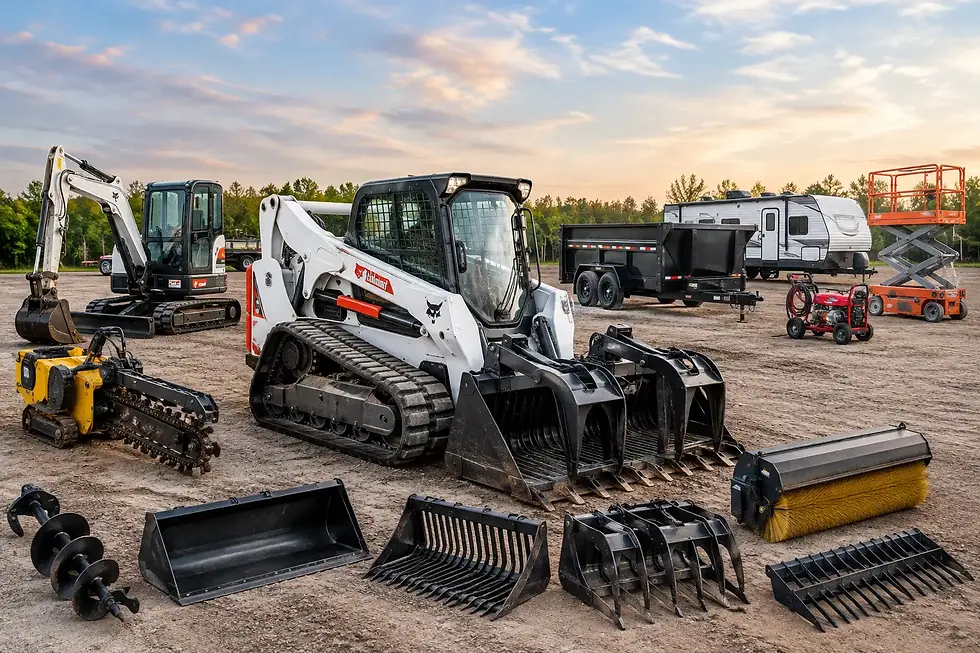
A general-purpose bucket is the workhorse for most landscape jobs. It loads soil, gravel, mulch, and debris. It can strip loose material, stockpile it, and spread it across a rough grade. With a skilled operator, it also helps clean up the site at the end of the day, which is often where the labor savings really show.
But a bucket is not a grading rake, a trenching tool, or a brush grapple. If your project involves more than moving loose material, say so when arranging the rental. The attachment can matter as much as the loader itself.
Protect the Yard While You Get the Work Done
Landscaping equipment needs to work hard without wrecking the finished property. That takes planning, not wishful thinking.
Run the machine on the firmest route available. If you are crossing finished turf, use ground protection mats when practical and avoid working right after heavy rain. Saturated soil will rut under almost any machine, especially when it is carrying a load. Keep stockpiles close to the work zone so you are not making long, unnecessary runs across the yard.
Pay attention to turning. Tight turns on grass can scuff sod and leave marks that take time to repair. Make wider, smoother turns where space allows. When working beside a retaining wall, fence, septic field, or utility area, leave room for error. Compact equipment is easier to maneuver, but it can still do expensive damage in a hurry.
A good operator also keeps the load low while traveling. That improves visibility and stability, especially on uneven ground. Never rush a loaded machine down a slope or turn sideways on a grade because it seems faster. It is not faster when the job stops for repairs, cleanup, or a safety issue.
When Renting Beats Doing It by Hand
For a small flower bed, hand tools make sense. For a project involving several yards of soil, a gravel base, a retaining wall, a drainage swale, or a full backyard cleanup, hand hauling gets expensive in time and effort fast.
Renting makes sense when the machine can remove a major bottleneck. Think about a patio project where all the excavated soil needs to leave the backyard and several loads of base material need to come back in. Or a spring cleanup where storm-fallen brush, old landscape timbers, and piles of soil all need to be moved before the real work starts. Those are loader jobs.
The rental window matters too. If the site is ready, materials are delivered, and the crew is lined up, one productive day with a compact machine can accomplish what would otherwise drag across multiple weekends. If you are still waiting on stone, deciding on layout, or building the wall one course at a time, scheduling the loader too early can waste the rental period. Have the work staged before the machine arrives.
Questions to Answer Before You Book
A straightforward rental conversation goes much better when you know four things: your access width, the material you are moving, the work you need done, and the ground conditions. Photos of gates, slopes, and the work area can help prevent bad assumptions.
Ask about delivery if you do not have the right trailer or tow vehicle. Transporting equipment is not the place to guess. Delivery keeps the job simpler, gets the machine to site properly, and lets you focus on preparing the yard instead of fighting with loading ramps.
You should also be honest about your experience. A capable homeowner can learn basic loader work, but heavy equipment deserves respect. Get a clear operating walk-through, know the controls, identify emergency procedures, and keep kids, pets, helpers, and bystanders out of the work zone. If the job involves steep terrain, large lifts, deep excavation, or utilities, bring in an experienced operator or contractor.
Plan the Work Sequence Before the Loader Arrives
The fastest jobs have a simple flow: clear the area, remove what has to go, bring in base material, shape the grade, then place finish material. Rehandling the same pile three times is wasted machine time.
Set aside a staging area for incoming material and a separate area for debris. Keep dump locations close enough that the loader is traveling productive distances, not making long laps. If a delivery truck is bringing gravel or soil, tell the driver where you want it dropped with the loader's travel route in mind.
Mini Muscle Rentals is built around that practical reality: serious equipment for places where access is tight and the work cannot wait. Whether you are tackling a backyard grade, a cottage cleanup, or a contractor's material-moving day, the goal is simple. Get the machine in, put it to work, and get the site cleaned up without extra headaches.
Before you grab another wheelbarrow, walk the property and count the loads. That number usually tells you whether a mini loader is a convenience or the tool that saves the whole job.


Comments