
Equipment for Post Hole Digging That Works
A post hole looks simple until you hit packed clay, roots, rocks, or a buried piece of old fence wire. Then the wrong equipment for post hole digging turns a one-day fence job into a sore-back, broken-handle mess. The right setup gets holes straight, deep, and sized properly without tearing up the rest of your property.
Whether you are setting fence posts, building a deck, putting in a gate, or installing a sign, start by matching the machine to the ground and access. More power is not always better if it cannot get through the gate. But a small hand tool is not the answer when you have 40 holes in Manitoba clay.
Start With the Hole, Not the Machine
Before choosing an auger or loader, know what the job demands. Post diameter, hole depth, soil conditions, access, and the number of holes all matter. A few shallow holes for a mailbox are one thing. Deep holes for a line fence, privacy fence, deck piers, or heavy gate posts are another.
Most fence posts need a hole wide enough to allow proper backfill and adjustment. Deck piers may need deeper, wider holes depending on the build plan and local frost requirements. Do not guess. Mark your layout, confirm post spacing, and know the target depth before equipment arrives.
Then look at the site honestly. Can a machine reach the work area? Is there a narrow side yard, a cottage path, mature landscaping, or a soft lawn that needs protection? The goal is not just to dig a hole. It is to finish the job without creating a bigger cleanup job.
Equipment for Post Hole Digging by Job Size
There is no single best tool for every hole. Manual tools, walk-behind augers, and hydraulic augers all have a place. The right choice comes down to production, ground conditions, and how much physical work you are prepared to do.
Manual post hole diggers for small, clean jobs
A clamshell post hole digger and digging bar can handle one or two holes in loose, workable soil. They are cheap, easy to transport, and useful for cleaning loose material from the bottom after machine digging.
That said, manual tools are slow in compacted soil and brutal around roots or rocks. They also make it harder to keep a deep hole straight and consistent. Use them when the job is genuinely small, not because you want to save a few dollars while losing a full Saturday.
One-person and two-person augers for moderate work
Gas-powered augers are a step up when you have several fence holes and decent access. A one-person unit can work for smaller bit sizes in lighter soil. A two-person auger gives you more control and torque for larger holes, but it also requires two people who can work together safely.
These machines are useful where a skid steer cannot fit or where bringing in larger equipment would damage a finished yard. The trade-off is operator fatigue. When the bit catches a root or rock, the auger can twist hard. That is not a place for rushed work, loose footing, or a person working alone beyond their limits.
Hydraulic augers for serious production
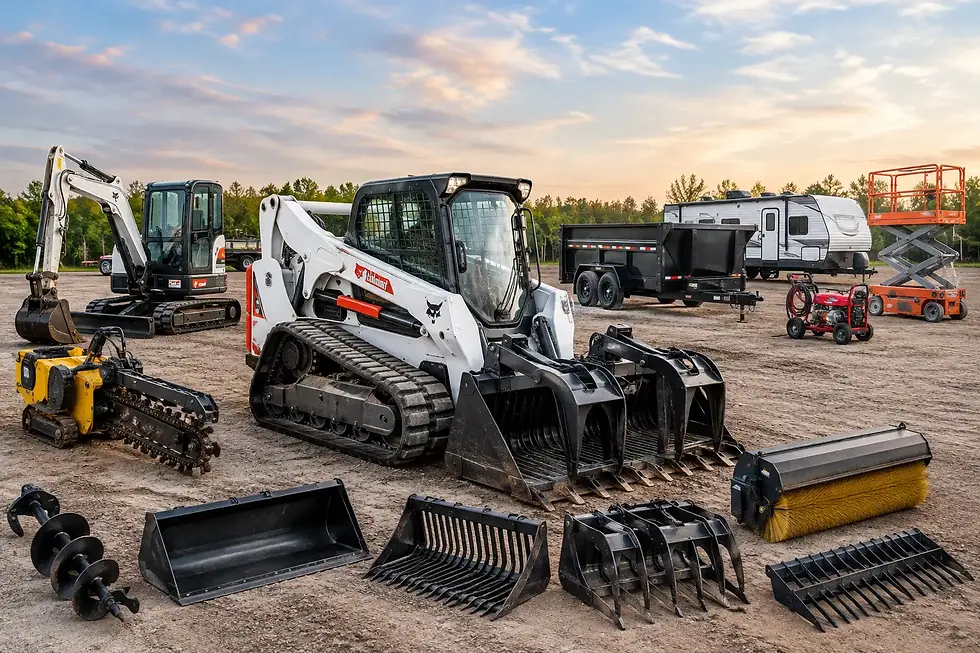
For a long fence line, multiple deck footings, gate posts, or stubborn ground, a hydraulic auger mounted to a compact loader or skid steer is usually the smart move. Hydraulic power keeps the bit turning under conditions that stop a handheld unit cold. It also helps you keep the holes more consistent from the first post to the last.
A compact machine with the right auger attachment brings real production without needing the footprint of oversized equipment. That matters on older residential lots, rural properties, and cottage sites where access is tight and landscaping is already in place.
A machine such as a Bobcat T770 has the muscle for demanding digging and site prep, but access still decides whether it belongs on the job. If the route is narrow, soft, steep, or lined with trees, plan the path before booking. Big power only helps when it can get to the holes.
Match the Auger Bit to the Post
The auger drive supplies the power, but the bit does the cutting. Using the wrong bit size is one of the fastest ways to waste concrete, backfill poorly, or struggle to set posts plumb.
For light posts, a smaller bit may be enough. For larger wood posts, gate posts, and deck piers, you need room around the post for leveling and proper fill. A hole that is barely wider than the post makes adjustment difficult. A hole that is far too wide means more material, more labor, and more time.
Bit condition matters too. Worn teeth and dull pilot points do not cut cleanly. They scrape, bounce, and make hard ground feel worse than it is. If you are renting equipment, ask about the available bit sizes and whether the teeth are suited to the soil you expect to encounter.
Rocky ground can require more than an auger. A digging bar, breaker attachment, or a change in post location may be necessary when you find large buried rock. Do not force the auger repeatedly against something it cannot cut. That wastes time and can damage equipment.
Hard Ground Changes the Plan
Dry clay, frost-affected soil, roots, and fieldstone all change how a hole should be dug. The trick is recognizing when the job has moved beyond a basic auger.
In hard clay, let the bit work instead of crowding it. Apply controlled downward pressure, pull the spoil regularly, and avoid packing loose material back into the hole. If you run too fast or force the bit, it can polish the hole walls and make cleanup tougher.
Roots are common along fence lines near trees and shelterbelts. Small roots may cut with the auger. Larger roots may need to be cut separately, and you should avoid damaging major roots near healthy mature trees when possible. Moving a fence line slightly can be smarter than turning one hole into a battle.
Wet soil creates a different problem. An auger can pull up heavy, sticky spoil that clings to the bit and drops everywhere. It may also leave weak, sloppy hole walls. If the site is saturated, waiting for better conditions can save time and protect the lawn from ruts.
Access Is Part of the Equipment Decision
A powerful machine parked at the curb does not help with holes behind a narrow gate. Measure access before choosing equipment. Check gate width, side-yard clearance, overhead branches, slopes, soft areas, and the turning space at the work zone.
This is where compact equipment earns its keep. It can move into places where larger rental machines are more trouble than they are worth. You get hydraulic power close to the work without flattening a garden bed or chewing up half the yard getting there.
For rural and cottage properties around Beausejour, Lac du Bonnet, Pinawa, and surrounding areas, access can be the whole job. Long drives, treelines, uneven ground, and remote work areas need a delivery and equipment plan that makes sense before the machine rolls in.
Dig Straight, Set Strong
A clean hole is only half the job. Mark every location before digging. Use a string line for fence runs, check corners carefully, and confirm gate openings before the first hole is drilled. A crooked first post can turn into a crooked fence line fast.
Keep the auger vertical as you start. Check the hole after every pass, especially on deeper holes. If a hole wanders, correct it early instead of trying to force a post straight later. Remove loose spoil from the bottom so the post has a firm bearing surface.
Before digging, call for utility locating where required and never assume a private line is shallow or inactive. Irrigation, electrical feeds, gas lines, septic components, and old buried material can all be where you least expect them. Equipment does not replace common sense.
Rent the Power You Actually Need
Buying a post hole machine makes sense only if you use it often enough to justify maintenance, storage, transport, and repairs. For most homeowners and many contractors, renting is the cleaner answer. Get the machine, bit, and delivery plan that fit this specific job, then send it back when the posts are in.
Mini Muscle Rentals is built for jobs where real power has to fit into real spaces. If you have a fence line behind a tight access point or a deck project that needs more than a shovel and stubbornness, choose equipment that can reach the work and finish it right.
The best post hole setup is the one that leaves you with straight holes, solid posts, and enough energy left to build the fence.


Comments