
How to Rent a Compact Loader Safely for Real Jobs
A compact loader can turn a weekend of wheelbarrow work into a few productive hours. It can also tear up a lawn, tip on a slope, hit a buried line, or make a bad day worse if the operator treats it like a giant lawn tractor. The goal is simple: rent a compact loader safely by matching the machine to the job, preparing the site, and operating it with your head up.
For contractors, that means protecting the crew, schedule, and customer’s property. For homeowners, it means getting real work done without learning hard lessons beside a new retaining wall or cottage driveway. Compact equipment has big muscle, but it still needs a capable operator and a clear plan.
Rent a Compact Loader Safely Starts Before Delivery
Safety starts before the machine rolls onto your property. Be honest about the work, the access, and the ground conditions when you book. A compact loader is a strong fit for moving fill, spreading gravel, clearing brush, loading material, grading, trenching, and site cleanup. But the right machine and attachment depend on more than the size of the pile.
Measure the tight spots. Check the narrowest gate, driveway pinch point, bridge, tree gap, and path around the house. Do not assume a machine will fit because a pickup can. Account for mirrors, tracks or tires, turns, uneven ground, and room to work once it reaches the backyard.
Then look up and down. Low branches, eaves, power lines, soft shoulders, septic fields, hidden stumps, drainage ditches, and wet ground all change the plan. If you are working near utilities or breaking ground for a trench, arrange for underground utility locations before the work begins. A loader bucket or trencher does not care whether the line is electrical, gas, water, fiber, or irrigation. The operator needs to care.
Tell the rental team what you are moving and where it needs to go. Wet clay, concrete chunks, topsoil, gravel, brush, and pallets do not behave the same way. A good rental conversation prevents the classic mistake of getting a machine that fits through the gate but lacks the lift, traction, or attachment needed to finish the job.
Pick the Machine and Attachment for the Work
Do not rent more machine than your site can handle, but do not under-rent the job either. Bigger equipment can carry more, yet it may be too wide, too heavy for finished ground, or too awkward around buildings and trees. A compact tracked loader can offer useful traction and lower ground pressure on softer terrain, while a wheeled skid steer may make sense on firm, open surfaces. Conditions decide.
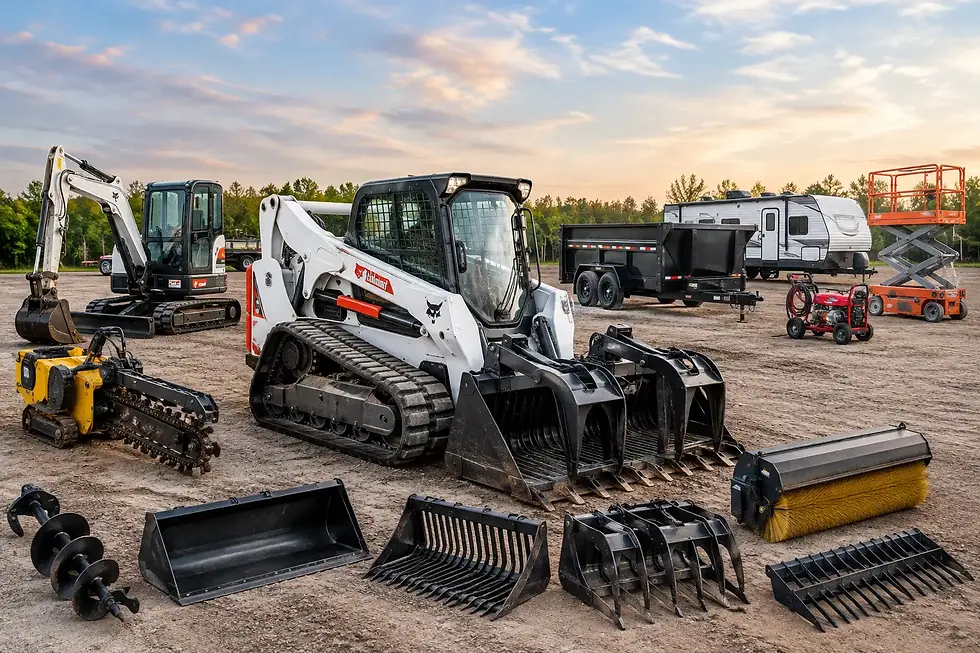
Attachments matter just as much. A general-purpose bucket handles dirt, gravel, and cleanup. Pallet forks are for stable, properly secured loads. A grapple is built for brush, logs, and debris, while a trencher is purpose-built for digging narrow runs. Trying to use the wrong attachment because it is already on the machine wastes time and creates risk.
Ask for the operating capacity and lift limitations of the specific loader you rent. Do not rely on a number you saw for a different model online. Load limits change with the machine, attachment, lift height, ground angle, and how far the load sits forward of the coupler. Heavy material can surprise you fast, especially when the bucket is raised.
Get a Real Walkaround Before You Start
When the machine arrives or you pick it up, do not rush the handoff. Take the walkthrough. Learn the controls, safety interlock, parking brake, attachment latch, auxiliary hydraulics, emergency procedures, daily checks, and approved tie-down points. If a control is not clear, ask. Guessing is not an operator skill.
Before each shift, walk around the loader with the engine off and the attachment lowered. Look for hydraulic leaks, damaged hoses, loose pins, cracked welds, worn tracks or tires, missing guards, and debris packed around moving parts. Check fluid levels as instructed for that machine. Make sure the attachment is fully connected and locked before it ever leaves the ground.
Keep the cab and steps clean. Mud, snow, loose gravel, and tools become slip hazards. Use three points of contact getting in and out. Once inside, fasten the seat belt and lower the restraint bar or engage the required safety system. These are not optional steps for “just one quick scoop.” Most quick scoops take longer than planned.
Work the Site in a Safe Order
Clear the work zone before operating. Keep kids, pets, bystanders, and vehicles out of the area. A compact loader has limited visibility close to the machine, especially behind it and around a raised load. Set a boundary people understand and shut the machine down before anyone enters the operating zone.
Walk the route you will use with the machine. Identify soft spots, holes, steep side slopes, drop-offs, rocks, stumps, and overhead hazards. Mark obstacles that may disappear from view once you are seated. If ground is questionable, do not test it at speed with a loaded bucket.
Have a spotter when visibility is blocked or when you are working near structures, traffic, or tight access. One spotter is better than three people shouting directions. Agree on hand signals before starting, keep the spotter visible, and stop immediately if you lose sight of them.
Plan where material will be stockpiled. Keep piles away from excavation edges, drainage paths, and access routes. A pile that looks harmless can block your turnaround, hide a hazard, or add weight where the ground is already weak.
Operate Low, Slow, and Level
The safest loader habits are not flashy. Travel with the bucket or load low to the ground. Keep the heavy end of the machine pointed uphill when working on a slope, following the machine’s operating guidance. Avoid side-hilling whenever possible. A small slope can become a serious problem when the bucket is full, the ground is rutted, or the load shifts.
Make wide, controlled turns. Fast turns with a raised load are a rollover setup. Slow down before changing direction, especially on loose gravel, wet grass, or uneven ground. Do not use speed to force a bucket into a pile or ram material apart. That beats up the machine, attachment, and operator.
Load evenly and do not exceed the machine’s limits. If the rear of the loader feels light, the steering gets vague, or the material blocks your view, stop and adjust. Take smaller bites. Multiple manageable loads are faster than recovering from a tip, repairing turf, or replacing a damaged fence.
Watch your blind spots every time you reverse. Look over your shoulder, check mirrors if equipped, and back up slowly. Never allow passengers on the machine, bucket, forks, or attachment. Compact loaders are one-operator machines.
Special Rules for Forks, Trenching, and Cleanup
Pallet forks need extra discipline. Confirm the load is stable, centered, and within the rated capacity. Keep it low while traveling, tilt it back as appropriate, and never let anyone stand beneath a raised load. If you cannot see where you are going, travel in the direction that gives you the best view or use a spotter.
With a trencher, inspect the planned route again. Underground utility locates are essential, but they do not replace careful digging. Keep people clear of the chain and spoil area, shut down before clearing jams, and never reach into moving equipment. Follow the attachment instructions for depth, transport position, and hydraulic connection.
For brush and demolition cleanup, watch for wire, chain, rebar, hidden rocks, and material that can spring or roll. Do not lift unstable debris higher than needed. A grapple gives control, not permission to carry an oversized tangled mess across rough ground.
Fuel, Transport, and End-of-Day Care
Use the correct fuel and fill only with the engine off, away from ignition sources. Clean up spills right away. At the end of the shift, park on level ground, lower the attachment, idle down as required, shut the machine off, remove the key, and secure it from unauthorized use.
If you are hauling the machine yourself, use a trailer rated for the loader, attachment, and any accessories. Load on level ground with proper ramps, center the machine, lower the attachment, and use the approved tie-down points. Do not improvise with light straps, a questionable trailer, or a truck that is not rated for the load. Delivery can be the smarter call when the job is tight on time or your transport setup is not built for it.
For jobs around Beausejour, Lac du Bonnet, Pinawa, and cottage properties with narrow access, Mini Muscle Rentals can help match delivery and equipment to the site. That is useful, but the operator still owns the safety of every pass, lift, turn, and load.
A compact loader earns its keep when it works hard without creating a second project. Take the walkthrough, keep the load low, respect the ground, and stop when something feels wrong. The best rental job is the one that ends with the work finished, the property intact, and everyone heading home safely.


Comments